Fostering the Go Anywhere Dog℠ Way · Post 3 of 3. Read it with Bringing a Foster Dog Home to Your Dog and Fostering a Puppy Under 6 Months.
Your foster dog is three days in, finally relaxing, working on a chew. Your dog wanders past. Suddenly there’s a stiff body, a lowered head, a growl you felt in your chest.
Take a breath. This is one of the most normal things a dog can do, and it’s very workable.
Four things dogs guard, and why
Dogs primarily guard four things: food, toys, resting places and loved ones. They come pre-programmed to believe it’s a matter of survival.
Sound familiar? Kids fight over the last cookie. They fight over the game controller, the best spot on the couch, and the front seat. They fight over Mom and Dad’s attention. Somewhere among a toddler’s first words, right next to mama, is mine. Nobody thinks that makes a child bad. It’s development.
Same for dogs. A dog who guards isn’t “being alpha” and doesn’t need to be “put in his place.” Resource guarding is a fear response, a fear of losing something that matters. And a rescue dog, who may have truly gone without, has every reason to hold on tight.
A growl is a gift
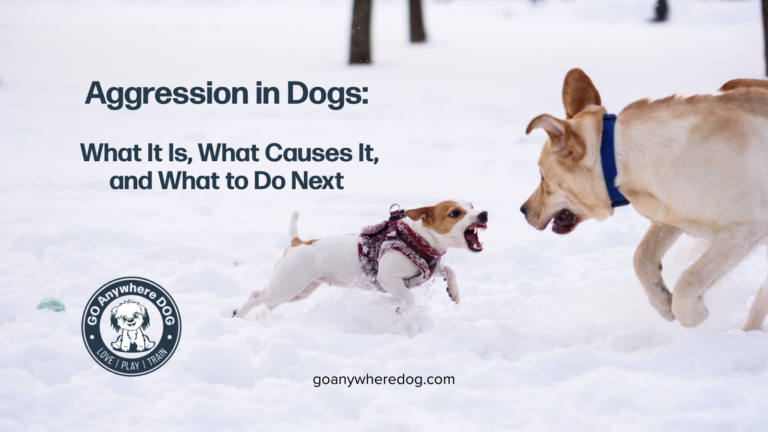
A growl, a snarl, or a snap at the air is brilliant communication. It’s a dog using their words, the only ones they have, to say please back off before anything worse happens.
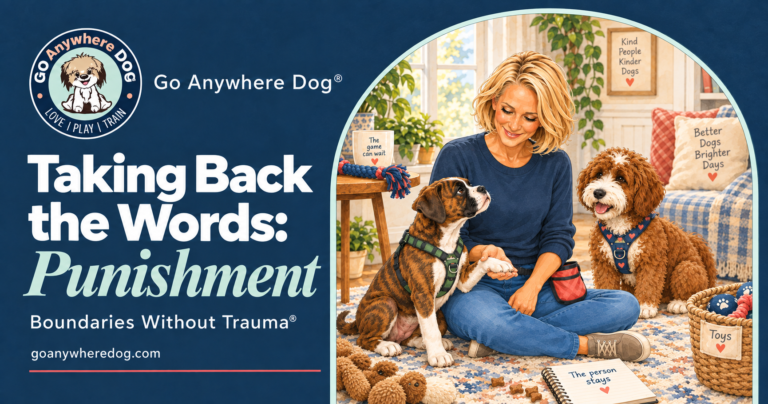
Never scold or punish it. Ian Dunbar compares punishing the growl to taking the ticker out of a time bomb: the explosion still comes, you just don’t get the warning anymore.
So when you hear one:
- Soft happy talk. Tell them thank you for using their words.
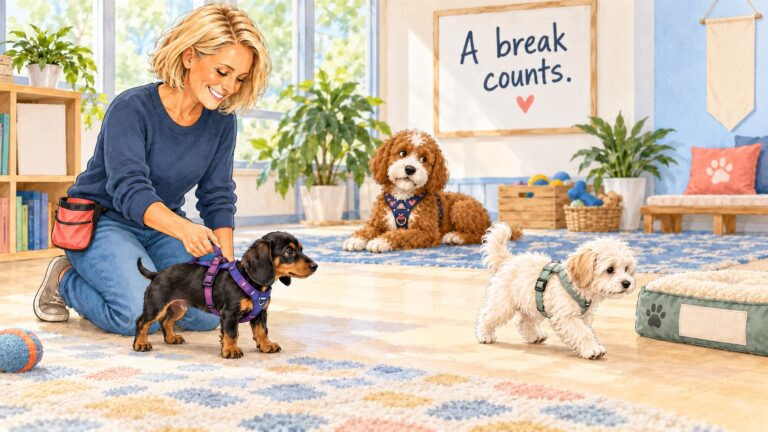
- Give them space from the other dogs for a bit.
- Make a quiet note to yourself: what was the item of contention?
- Take it slow with that item for a while.
Play builds trust (good play, anyway)
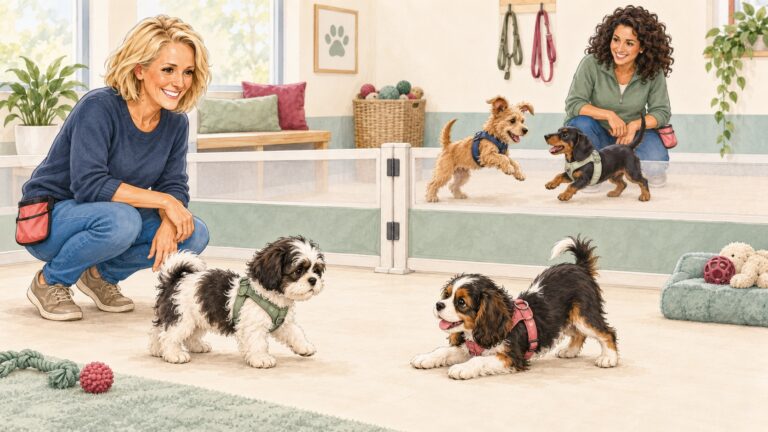
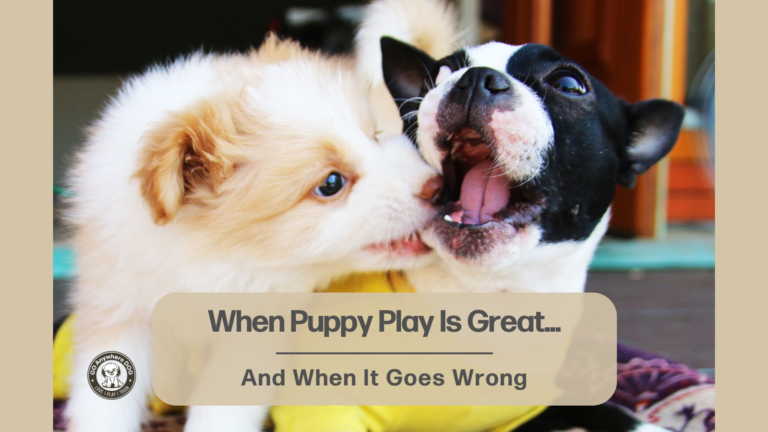
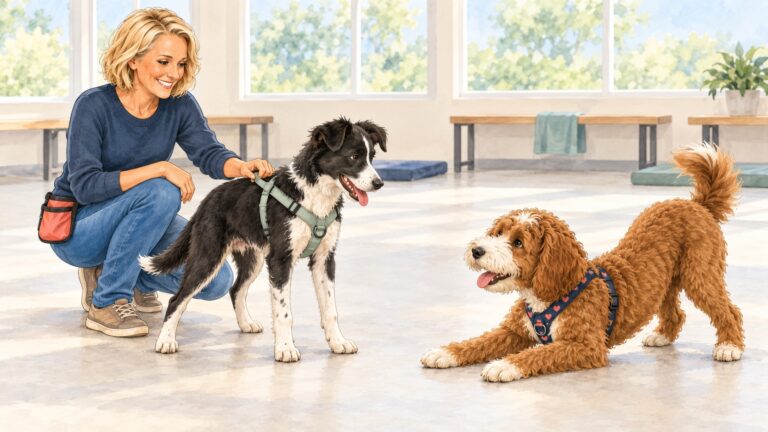
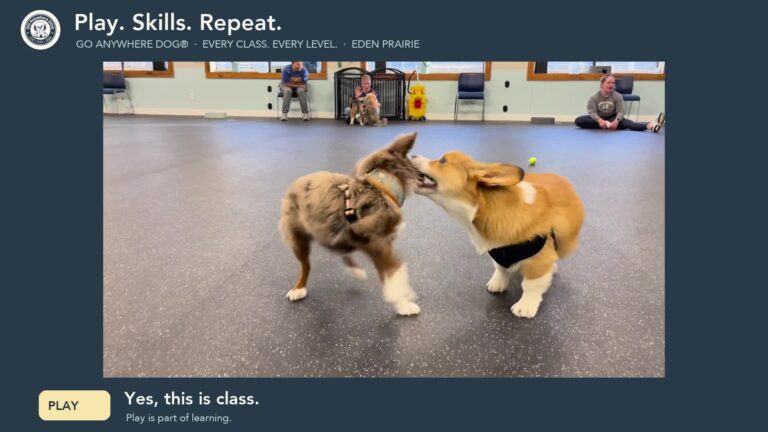
Here’s something hopeful: most dogs guard less from close friends who’ve become playmates. Good play builds trust between dogs.
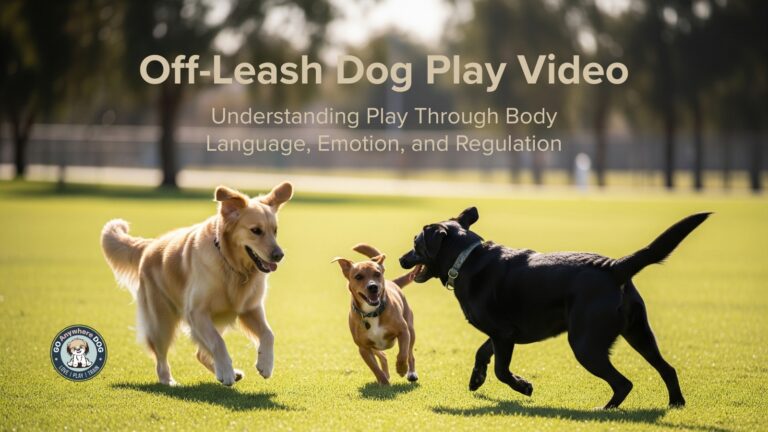
Good is the key word. Here’s what good play looks like, and what to watch for: Healthy Off-Leash Dog Play: What to Watch →
In the first three days
If guarding shows up in the first three days, the dogs need separation for a bit unless you’re fully supervising. It’s early. They don’t know each other yet, and nobody owes anybody their bone. (More on the first three days here: Bringing a Foster Dog Home to Your Dog →)
Chew time without the drama
Chews are wonderful for dogs, and they’re also prime real estate. Here’s how we set them up so everyone gets to enjoy theirs.
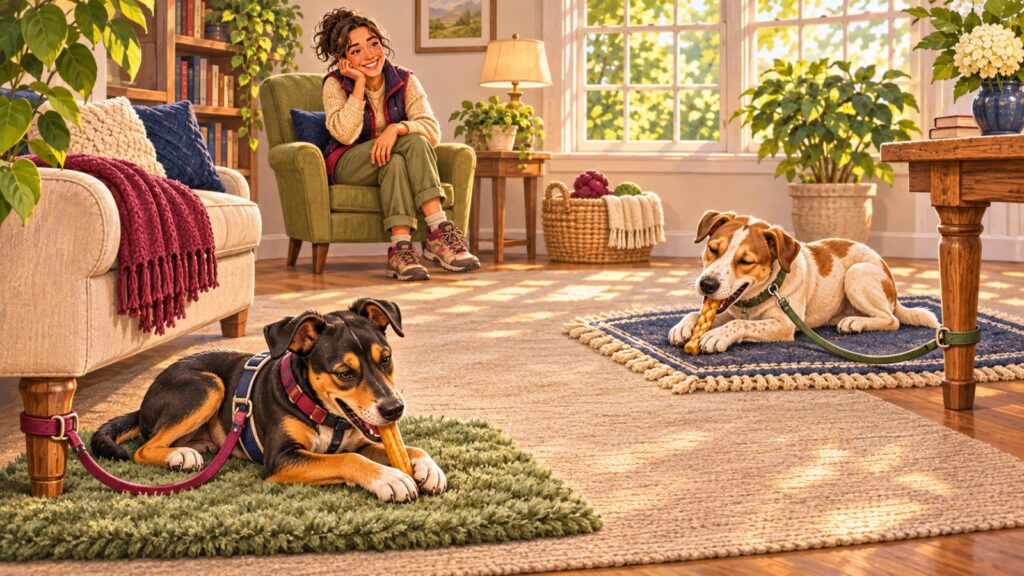
The setup: Loop one dog’s leash under the leg of the sofa. Loop the other’s under a table leg, or whatever sturdy thing you have, far enough away that the dogs can’t reach each other, with a two-foot buffer to spare. Give each dog their chewie. They stay on their leashes until all the chews are finished or put away.
Through repetition, dogs learn to stay with their own chew instead of wandering over to check whether the other one got something better.
You remember this. Your brother reaching across the table to steal a fry? You smacked that hand. Don’t touch MY food! How rude. Dogs feel exactly the same. We’re just making sure nobody has to smack any hands.
When your foster guards you
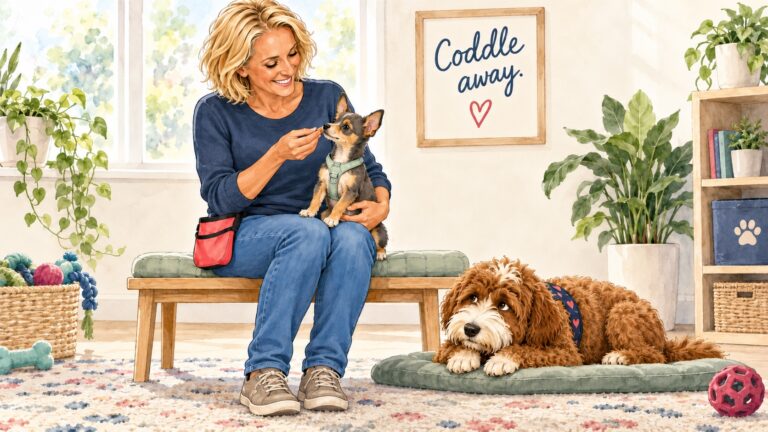
It usually happens like this. You’re on the sofa, everybody snuggled and happy. The other dog wanders over, and the dog in your lap growls and snaps. Oh no you don’t. It’s my mommy time!
Don’t scold anyone. Simply say “too bad,” get up, and walk away. Fully away.
The dog talking smack wanted to keep you to himself. After several repetitions, he learns that it doesn’t get him what he wanted. No yelling required.
When you need something back
If your foster has something you need to take (a sock, a stolen sandwich, something unsafe), it’s not urgent. Even when it feels urgent, chasing and grabbing teaches a dog to swallow fast or guard harder.
Instead, scatter a generous handful of something wonderful a little way off. When they go for the snacks, quietly pick up the item. No power struggle, and your approach starts to predict good things instead of losses.
And pick your battles. If it’s a stick or a cardboard tube and it isn’t hurting anybody, consider letting them have it. Taking away every fun thing a dog finds is one of the fastest ways to build a guarder.
If a scuffle breaks out
It happens, even in careful homes.
Try not to yell. (I know. Sometimes you’re yelling before you realize it, because you got scared. You’re human.) Don’t reach in and grab. Hands near a fight are how people get hurt, and grabbing a dog mid-conflict takes away his way out.
Instead, flip the switch. Become your goofiest, silly stupid self: loud happy talk, WOO HOO!, clapping, and running away from the dogs. Away recruits following. Toward recruits more conflict.
Afterward, take notes: which dogs were involved, what items were nearby, and any injuries. Then reach out to your rescue and let them know. They need this information so they can apply their policies and help you sort it out.
Guarding between dogs gets its own section at our Feb 21 seminar for foster homes and rescues. More dogs means more to guard, and we’ll walk through the management that keeps it from escalating, on real video. See the Feb 21 seminar →
It’s normal to have some bumps
Rescue pups have had, at the very least, a scary, confusing journey getting to your house. Some guarding along the way is normal. Getting to know them is how we help them never have to go through anything like that again.
Want to go deeper? The best book on the subject is Mine! A Practical Guide to Resource Guarding in Dogs by Jean Donaldson, founder of The Academy for Dog Trainers, where I trained.
Questions foster parents ask
Why is my foster dog resource guarding?
Dogs come pre-programmed to guard four things: food, toys, resting places and loved ones. Guarding is a fear of losing something that matters, not “being alpha,” and a rescue dog who may have gone without has every reason to hold on tight.
Should I correct my foster dog for growling?
No. A growl is communication. Punishing it takes away the warning, not the feeling. Use soft happy talk, give space, note the item, and take it slow with that item for a while.
How do I give two dogs chews without a fight?
Leash each dog to a sturdy piece of furniture, far enough apart that they can’t reach each other with a two-foot buffer to spare, and keep them there until the chews are finished or put away.
What should I do if my foster dog and my dog get in a scuffle?
Try not to yell, and don’t reach in and grab. Flip the switch with loud happy talk and clapping while you move away from the dogs. Afterward, note the dogs involved, items nearby and any injuries, and tell your rescue.
Jody & your Dog Life Coaches
Sources
- Donaldson, J. Mine! A Practical Guide to Resource Guarding in Dogs. The Academy for Dog Trainers. academyfordogtrainers.com