In This Video
In this earlier lesson, Jody explains common fears, individual differences, early experiences and ways to help: notice the trend, allow distance and hiding, reduce intensity, and pair manageable encounters with good things. The updated companion below brings those foundations into our current approach.
Key Moments
1:33 — Why fear is the default response to the unknown
2:55 — Genetics and a dog’s ability to recover from fear
4:30 — Early environment, socialization, and first experiences
7:35 — Common fears involving people, places, handling, and noise
14:30 — What to do when your dog shows fear
19:31 — Use distance, lower intensity, and small steps
Full Transcript
0:00 — [Music]
0:04 — Let’s get started on today’s lesson. Our first topic is fear: “I’m scared.” Your dog’s fear is the number-one thing that’ll rob joy from both you and your pup, and it’s most frequently what leads to growling, snarling, snapping, and biting. It’s why my priority is for you to know how to recognize when your dog is scared and what to do about it.
0:32 — Here’s what we’ll cover: why your dog is fearful; why your dog is more or less fearful than others; the most common fears we see in dogs; what to do when your dog shows fear; and when fear becomes chronic or a phobia. Let’s start with a quote: “The mark of fear is not easily removed.” — Ernest J. Gaines.
1:00 — We all know this for ourselves. We know exactly how hard it is to overcome our own fears, and it’s important to recognize and remember this because it’s no different for our dogs. Fear sucks and has a huge impact on our quality of life. Why is your dog afraid? We don’t always have the exact answers for dogs. They can’t tell us with words why they are afraid like we as humans typically rely on.
1:33 — Here’s what we do know: fear is the default for everyone when we first encounter the unknown or unfamiliar. Anything new, never seen or experienced before, automatically triggers, “Am I safe?” This is the case for dogs, us, and all animals. “Am I safe?” is key to fear first. It’s a matter of survival.
1:56 — Think of it this way: you’re out hiking on an African safari, you see a lion for the first time, and run up all excited, “Kitty, kitty, kitty.” Big mistake, and you become lunch. It’s pretty cool that we all come with a default to fear first until we know the answer: “Am I safe?”
2:18 — What factors affect why some dogs are more or less fearful than others? Most dogs, like most humans, will have some fears. How fearful your dog is and how well your dog recovers from a fear-evoking event varies from dog to dog. Several factors affect your dog’s ability to recover after getting scared and discover that a particular thing or situation is safe.
2:55 — Before your puppy is even born, one factor has a big influence on your pup’s tendency toward fearfulness and ability to bounce back: genetics. If your pup’s mom and dad were highly fearful and had a hard time recovering from fearful situations, those genes have a higher tendency to be passed on. Good breeders pay attention to this when deciding whether a female or male should be bred.
3:32 — Mom is pregnant, and for about 63 days those puppies grow and develop in her belly. Just as a mother’s stress during pregnancy affects a human child, it’s the same for puppies. Next we have Mom’s behavior after birth during her early care. Research shows that if Mom startles easily or has a hard time recovering from fearful events, her puppies have a higher tendency toward the same. We want great efforts made to help Mom feel happy and safe during pregnancy and while caring for her babies.
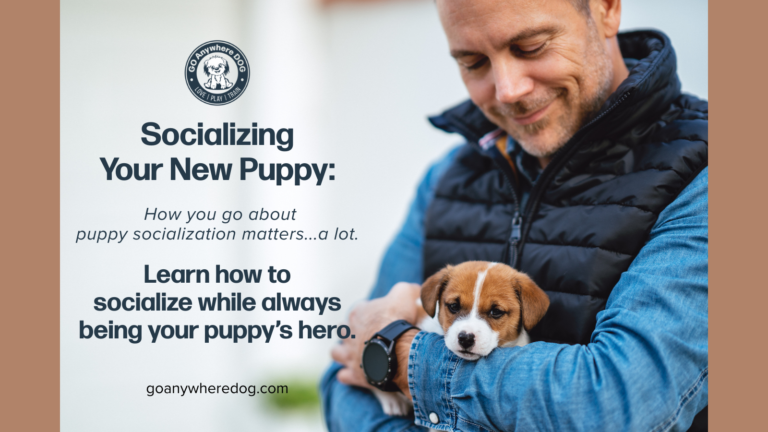
4:20 — Now for the things where we have lots of impact, despite what took place before our puppy landed in our loving care. Early environment and socialization are where you can help your puppy enormously. Dr. R.K. Anderson, Dr. Ian Dunbar, and my teacher Jean Donaldson have spent most of their careers working to get this information widely known. If you have a puppy, head to the puppy socialization video, where we go into ensuring those first experiences are awesome.
5:10 — Then there are bad experiences. The first time your puppy sees or experiences something new carries really big weight on how your puppy will feel about it in the future. The first experience determines, “Am I safe?” If a first or early encounter proves to be a really bad experience, we’ll have our work cut out for us to change your dog’s mind. Jean Donaldson said, “Fear is easy to get and, at least compared to other behavior problems in dogs, the hardest to fix.”
5:47 — Later bad experiences will impact your dog as well. Each situation varies in how much weight it carries. If your dog has lots of good experiences built up and later has one bad experience, your dog has a much better chance of recovering. How bad the experience was will also affect how well your dog bounces back.
6:17 — Your dog has played with lots of dogs and had great experiences. Another dog rolls your dog and rattles him a bit. There’s a good chance your dog will not fear playing because that experience was not horrible and he’s had lots of fun before. But what if your dog got into a serious fight and had a bad injury? Most dogs with lots of previous good experience will still recover nicely. Some may approach certain dogs with caution, and some may be downright scared.
6:59 — Keep a close eye on your dog in play sessions. If your dog shows significant fear, pay attention to whether it is trending better, staying the same, or getting worse. If either of the latter two, get professional help. Bad experiences can sometimes have little impact and sometimes carry a whole lot of weight. If your dog has continued fear, don’t ever take that lightly. Help him or her out.
7:35 — The most common fears we see in dogs: clients often think fear comes out of nowhere. Fear, or aggression, does not come out of nowhere. Most people are not versed in the typical things dogs fear. Sometimes we don’t recognize what it is about because it may seem irrational to us. People have irrational fears too. Irrational to you or not does not change that it’s scary for that person or dog.
8:16 — Common fears include strangers, men, women, children of varying ages, dogs, and other animals. Dogs do not initially generalize that everyone is human like we do. Your dog may love women but be afraid of men, or love adults but find kids of certain ages scary. Pay attention to age, sex, color, size, unfamiliar hats or glasses, and the way a person, child, or dog approaches. Approach can be loaded all on its own.
9:16 — Environmental fears include many things. I’ve had dogs suddenly spooky-bark at something that has been in the house forever but simply moved to a new location. Anything unfamiliar or already predetermined as scary, things that suddenly move, or surprises like cars, bikes, and skateboards can trigger fear. Some dogs are okay with cars but not noisy trucks. For a super-spooky dog, it can be as simple as something blowing in a small breeze.
10:09 — Body handling: like us, some dogs have places they do not like touched. Sometimes there is no cause; they just don’t like certain touch. Sometimes it comes from a bad experience, like fear of paws being touched because a nail was accidentally clipped too far. Pain can lead to superstitious fears, meaning your dog connected something unrelated when pain occurred. Whatever your dog thought caused the pain is now scary. This is why using pain to modify behavior is as risky as it gets.
10:58 — Unfamiliar surfaces: say your dog has never walked across a metal grate. It feels different, may make a sound, or may rattle. Any of these can be scary. Slick, shiny floors can also be scary if your dog slips or his footing feels insecure. We occasionally saw this at daycare when dogs put on the brakes at the shiny concrete lobby floor. Long runner rugs cured the problem.
11:45 — Noises are most frequently thunderstorms, fireworks, or sudden booms. My sweet boy Buddha had noise fears that progressed to full-blown noise phobias. Ten years ago, when these fears first surfaced, I knew none of what I’m teaching you now. I tried many things that helped a little or not at all. Over the years Buddha’s fears broadened to more sounds. It’s been a heartbreaking journey.
12:29 — Buddha is now on prescription medication because there is nothing worse than seeing the pup you love tremble and feeling helpless. When fear is prolonged, you are not finding relief, and it reaches trembling, get to your vet. Discuss medication options to go along with a professionally laid-out behavior-modification plan.
13:00 — Separation anxiety is fear of being left alone or left by someone your dog is bonded to. It varies greatly. Some dogs whimper, cry, or bark briefly. Most puppies do this initially. Pay attention to whether it is getting better, staying the same, or getting worse.
13:30 — More serious separation anxiety can include vocalization, destruction of entry or exit points, damage to a crate or confinement area, self-injury, defecation, excessive drooling, and refusal to eat tasty food. Moderate to serious cases are some of the most painful I see for both you and your pup. Don’t wait to seek professional help. My colleague Malena DeMartini has devoted her career to helping dogs and parents with this affliction and teaching practitioners the best methods. A link is below the video.
14:30 — Now that you recognize fear through body language and know what she is afraid of, what do you do? There are different levels of fear. Sometimes your dog may startle at something that drops suddenly, just like you. You will likely recover quickly once you see everything is safe. The same is true for your dog. When we initially identify fear, we don’t want to overreact either.
15:08 — A child analogy: your young child trips and falls. Your first reaction can affect your child’s reaction. If you jump up and run over exclaiming, “Oh no, baby, are you hurt?” your concern can signal this was a bad thing and start crying. If you are calm, happy-talk, or redirect attention to something she likes, you can often circumvent a meltdown. Children and dogs pay attention to our state of mind about whether something is okay.
15:48 — Unless they are truly hurt, the best thing is to shift attention from what hurts and find comfort. Happy-talking children out of something upsetting often works, and the same tactic can work for dogs. Let’s look at happy-talking a baby and then a dog so you can see they are similar.
16:16 — [Happy-talk demonstrations. Some dialogue is unclear.] “All right, say a one, a two…” [Music.] “Okay, tissues. We need tissues.” “Yes, you are so good.” The dog was worried about a sound, but now it’s much better. “Oh yeah, we’ve got the chicken. It’s very good.”
16:47 — This is the simplest thing you can try, and it’s often my first go-to. The key is not to add tension to tension. The goal is to be fun and see if you can shift them out of upset simply.
17:05 — For a first experience, if your dog is totally freaking out and flailing—which is rare but can happen—bail him out as quickly as possible. Do everything you can not to add tension to a situation already causing this much distress. Happy-talk while moving him swiftly away. Don’t stop until he is totally okay again. Distance is your friend for really scary stuff.
17:51 — When it’s a first or early experience and your dog shows some fear but is not freaking out, observe first. Do nothing; just observe. Is he stable? Is he getting better or worse? Is he trying to hide? Let him. Do not coax him out from where he finds comfort. He’ll come out when ready. Let him go at his own pace. If he does not work through fear today, give him time and try again tomorrow or within a few days.
18:34 — Especially with strangers, stay away from pushing your dog toward them. If fear is not tended to in a manner respectful of how your dog feels, we may get aggression. We don’t want unnecessary risks, especially with people. If your dog leans forward or stretches cautiously toward the scary thing, he’s gaining courage. Let your dog approach people, dogs, or scary stuff on his terms and answer for himself, “Am I safe?”
19:12 — Most people and dogs will trend better in a short time if we let them work through it. Increase distance or decrease intensity if your dog was terrified or trending worse. Moving farther away often helps. Get far enough that your dog appears completely okay. It’s great if your pup can still see the scary thing. With noises, decrease intensity: make it less loud or use short bursts.
19:57 — Awareness of scary thing equals good things happen. When your dog isn’t trending better on his own, he’ll need help. Pair the scary thing at a comfortable distance or intensity with things your dog thinks are awesome. The key is your dog notices the scary thing first, then happy-talk, play a favorite game, or give really good food. We’re not talking kibble. Use something that makes a big impression, like roast beef or chicken.
20:40 — Your pup is afraid of big, burly men. Pup sees man; he gets roast beef. Man goes out of view; no more roast beef. Man appears again; he gets roast beef. Repeat, repeat, repeat, and don’t stop until he thinks big, burly men are super cool.
21:01 — Small steps and patience. With anything your dog finds scary and is not trending better quickly on her own, always go at her pace. Society has us wanting a quick fix or instant gratification. With behavior—ours or dogs’—quick fixes are an illusion. It’s not how behavior works. I have yet to find a quick fix that does not come without serious risk. Your quickest route to success is small steps and loads of patience. You love your dog, so it’s worth it. Be your dog’s hero, always.
21:52 — One more thing: lots of people, including professionals, still espouse the notion that you can reinforce fear. People say, “Don’t coddle your dog. You’re going to make the fear worse.” This stems from seeing someone add tension to tension. If you’re a wreck every time your pup is afraid, she may decide there’s good cause to be afraid because the situation upsets you too.
22:22 — You cannot reinforce fear by being there for your dog and offering comfort. As Maya Angelou beautifully stated, “When you know better, you do better.” Do your best to be there for your dog. Let your dog do what he needs to feel safe, and be your dog’s hero, always.
22:47 — When fear becomes chronic or a phobia, and your best efforts are not helping your pup overcome his fears, please don’t wait. Get professional help. Chronic fear is no fun and can progress to an all-out phobia with a terrible effect on quality of life for you and your fur baby. You may contact us or check the link below for a professional in your area from my alma mater, The Academy for Dog Trainers.
23:18 — Now you have knowledge about fear and how to help your dog overcome it. You also know that if things are not trending better with your efforts, it’s time to get professional help. Fear is the number-one cause of aggression, and it is the number-one thing that will rob us all of joy. I want for you and your dog a wonderful, joy-filled life.
23:49 — [Music]
Updated companion · October 2026. The video and transcript preserve the earlier lesson. This guide reflects how we teach these ideas in GAD 5.0 today.
Your dog stops at something you barely noticed. You have somewhere to be. He has questions about the recycling bin.
Before deciding he is being difficult, ask: is he upset? What you notice changes what you do next.
Start with the whole dog and the situation. If fear is intense, persistent or worsening, get individual help. A sudden change or discomfort with movement or touch also deserves a veterinary check.
Understanding Fearful Dogs: What Fear Really Means and How to Help
A frightened dog is still learning. He may be learning what predicts trouble, which actions bring relief and whether his person helps. The skill you hoped to practice may be harder to use right now.
Learning continues. Our plan needs to change.
Fear Is an Emotional State, Not a Behavior Problem
Fear is an emotional response, not a character verdict. Freezing, retreating, barking or lunging can be part of it. Those actions also have consequences: moving away may bring relief; barking may make someone retreat.
We consider both the feeling and what the behavior accomplishes. That gives us more to work with than “stubborn.”
Why Some Dogs Experience Fear More Intensely
Genetics, development, previous experiences, the current setting and health can all matter. You do not need a complete origin story to help in this moment.
Notice what brings the worry on, how intense it is, and how readily your dog recovers when the situation becomes easier. That information helps us plan.
Fear Signals Often Appear Before “Problem Behaviors”
Look for changes in movement and tension: slowing down, turning away, freezing, a lowered body, or scanning the surroundings. Read these with the context; a lip lick or yawn alone is not a diagnosis.
If your dog is asking for room, help before the request gets louder. A growl is information to act on, not a warning to scold away.
Why Pushing Through Fear Backfires
“He needs to get used to it” can send a caring person straight past what their dog is showing them. Repeated overwhelm can build a stronger expectation of trouble.
Instead, create distance, lower the noise or leave. Let your dog choose whether to approach again. Food can help build a better association at a manageable intensity; it should not pull a worried dog closer than he wants to go.
What Fearful Dogs Actually Need
Help your dog find relief. Use a familiar, friendly voice if that helps. Offer contact if he welcomes it; offer space if he leans away. Sometimes the useful answer is going home.
Comfort does not automatically reinforce the feeling of fear. Watch the response rather than defend the gesture.
As the situation becomes manageable, practice an easy next step: turning toward you, moving away together or exploring at a comfortable distance. Safety and useful skills grow together.
Progress With Fear Is Measured in Subtle Wins
Look for voluntary curiosity, looser movement, easier check-ins and recovery after a surprise. Taking food is one clue among many; a worried dog may still eat.
Staying closer is not the only win. Choosing to leave with you can be a very useful response. If the worry keeps recurring or is growing, change the plan with professional help.
The Takeaway
Make the situation easier before asking the learner for something harder.
You do not need to be a perfectly calm human to help. Notice, create room and offer support your dog finds reassuring. We can work on the rest together.
Explore the full Boundaries Without Trauma® framework, or ask Jeannie about private behavior help in Minneapolis and nearby suburbs.
Until next time, have fun and enjoy your dog.
— Jody & your Dog Life Coaches