
Picture a youngster having a very big feeling.
Crying. Shouting. Having an absolutely terrible time with the answer “no.”
The adult gets louder.
“You need to control yourself!”
Pause the scene.
There are two nervous systems here. The person with decades more practice is struggling with the very thing they’re demanding from the beginner.
That is a familiar human moment. And there is a great deal we could understand about it—if someone had taught us how behavior works.
Most of us learned the rules. Raise your hand. Wait your turn. Behave yourself.
We learned fractions. We learned the water cycle. Many of us reached adulthood without learning much about the thing we would spend the rest of our lives doing: behaving.
I think this is one of the biggest holes in our education. We spend our lives raising children, loving people, working together, caring for animals and trying to change our own habits. We need this information every day.
Instead, many of us inherited an impressive vocabulary for judging the results.
Lazy. Stubborn. Dramatic. Manipulative. Disrespectful. He knows better. She just wants attention.
But a label leaves the lesson plan unwritten.
What changes when someone is upset? What can a developing brain manage? What have past experiences taught them to expect? What has this behavior accomplished before?
Those questions give us somewhere useful to go. And they apply to both people in that scene.
First: are they upset?
Before I start considering what someone should know, I want to know whether they’re upset.
Frightened. Frustrated. Overwhelmed. Distressed.
Think about yourself in that state. How well do you listen? How generous is your interpretation of someone else’s words? How easily can you find the thoughtful response you’ll come up with later in the shower?
Now think about a youngster.
Big feelings are normal. The capacities to regulate those feelings, pause before acting and manage competing impulses are still developing. Human developmental research shows why emotional reactivity and developing control need to be considered together. Hare and colleagues’ research.
A child can tell you that hitting hurts and still hit when overwhelmed. A young dog can have practiced keeping four feet on the floor and still launch himself at a beloved visitor.
We are looking at learners. Their development belongs in our expectations.
Knowing the rule and managing the moment are different skills.
Return to the grown-up in our opening scene. We can become upset with someone for behaving badly while our own response provides a fairly lively demonstration of the same problem.
What has this come to predict? Pavlov’s piece of the picture
Ivan Pavlov’s work established a foundation for classical conditioning: through association, a previously neutral signal can come to elicit a response. Pavlov’s original lectures.
Here is what that can look like in ordinary life. A sound, a place or a tone of voice begins to predict what comes next. A dog gets excited by the sounds of dinner preparation. In our opening scene, the youngster may already associate that rising adult voice with an unpleasant encounter.
We don’t have to hold a meeting and decide to make these associations. Experience does the teaching.
So when someone reacts strongly to something that seems insignificant to us, an important question is: What has this come to predict for them?
“Nothing happened” may mean that nothing happened that we recognized. The individual responding has a history. That history came into the room with them.
What has this behavior accomplished? Skinner’s piece of the picture
B. F. Skinner’s work gives us another essential piece: operant learning. Consequences shape the likelihood of behavior happening again. Reinforcement strengthens behavior. Skinner’s discussion of reinforcement and alternatives to punitive teaching.
That makes “What happened afterward?” a useful question.
If interrupting repeatedly gets a response, it can become a dependable way to get one. If avoiding a task brings immediate relief, avoidance can become easier to repeat. If a puppy’s jumping reliably produces attention, jumping has something going for it.
The learner’s history of consequences gives us something to examine and change. We can make a useful alternative easier, teach it in manageable steps and arrange for it to work.
This includes the adult. If shouting stops a difficult moment quickly, the adult may become more likely to shout next time. We can get caught practicing the very response we wish we would stop using.
There is machinery on both sides of the interaction. Once you begin to see it, the character verdict becomes a lot less convincing.
It’s hard to hold shame and machinery in your mind at the same time.
What state are they in? Perry’s piece of the picture
Psychiatrist Bruce Perry’s work brings development, experience and the stress response into focus. In his teaching on state-dependent functioning, he explains how distress can change access to capacities involved in thinking, relating and managing a response. Perry’s presentation and transcript.
The ability someone demonstrates when comfortable may be harder to use when distressed. Their history also matters: repeated experiences help shape how their stress-response systems develop and respond. Perry on early experience and development.
This is why “You knew it yesterday” can miss the point. Yesterday and today may involve different demands, different feelings and a different capacity to cope with them.
When we recognize upset, we have a reason to reconsider our timing, our demands and the support we are providing.
In our opening scene, both people are becoming more upset. A longer lecture delivered with greater irritation may be a poor match for the problem in front of them.
We belong in the mammal conversation
Humans are mammals. Shared emotional systems are part of our evolutionary inheritance, and cross-species neuroscience helps explain that continuity. Panksepp’s work on mammalian emotional systems.
We learn associations. We learn from consequences. Our development and experiences shape our responses. Our current emotional state matters.
We can recognize these processes in a puppy and then forget to consider them in our child, our partner or ourselves. Somewhere between the dog bed and the kitchen table, we return to “They should know better.”
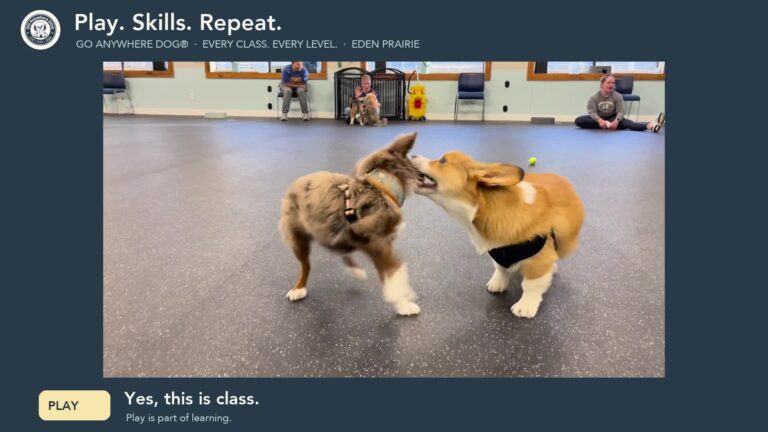
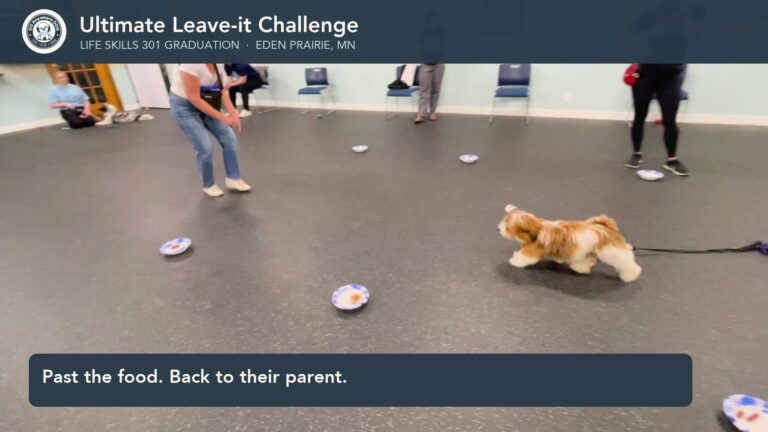
At Go Anywhere Dog®, I teach people as well as dogs. I want the humans to understand what they’re seeing, because understanding gives them more useful ways to respond. Our look inside the program shows play and skill work woven through classes.
Learning about behavior should travel home with the human. There are other mammals there. One of them pays the mortgage.
Understanding gives us something to do
Return to the youngster having a terrible time with “no.”
The adult notices their own rising voice. They pause, lower it and use fewer words. The answer can remain no. They can hold the limit while helping the youngster through the upset, then practice a usable way to ask, wait or get help.
If someone is hitting, we stop the hitting and protect the person being hit. Understanding gives us work to do: help with the upset, look at what happened before it, consider what the youngster can currently manage, and teach what comes next.
“Be good” leaves a lot of that lesson plan unwritten.
The same questions give us somewhere to go with our own difficult patterns. What sets this in motion? What immediate outcome keeps it going? What happens when I’m upset? What support or practice would make another response more available?
We can take responsibility for harm and make repairs. We can set a firm limit. Understanding helps us choose what to arrange and teach so the next attempt has a better chance.
I want this education to reach people long before they’re standing over a crying child, arguing with a teenager, struggling with a dog or calling themselves a failure.
Imagine growing up knowing that big feelings are part of development. That experience teaches associations. That consequences shape behavior. That being upset changes the situation. That learning takes practice, and the adults are learning, too.
Imagine how much unnecessary shame we might spare each other.
Understanding changes what you see. What you see changes what you do.
The next time “What is wrong with you?” comes to mind, start here:
Are you upset? What have you learned? What do you need help learning next?
Ask yourself, too.
Keep exploring the machinery
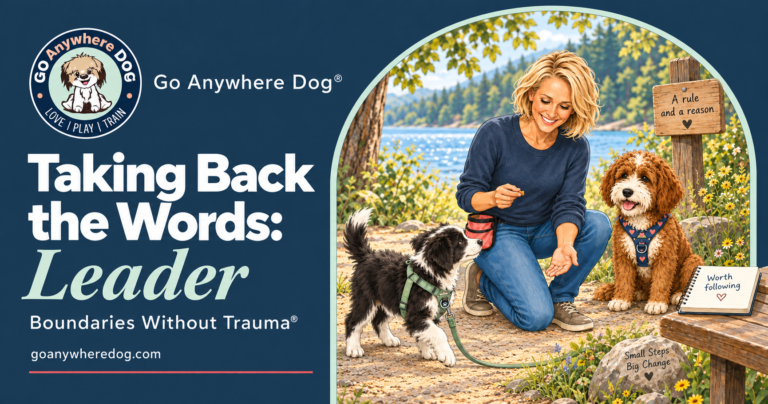
See how these ideas come to life in GAD’s play-and-learning program, practice reading dog body language, or explore our Boundaries Without Trauma® approach.
Looking for support with the dog in your family? Explore puppy classes at our Eden Prairie school or private in-home training.