Fostering the Go Anywhere Dog℠ Way · Post 2 of 3. Read it with Bringing a Foster Dog Home to Your Dog and Resource Guarding in a Foster Home.
Everything in our post on bringing a foster dog home still applies: pick up the good stuff, don’t coax, give space, never add tension to tension. Bringing a Foster Dog Home to Your Dog →
But a puppy under six months is a different conversation, for two reasons. Puppies don’t speak fluent Dog yet, and adult dogs know it. And the weeks your foster puppy spends with you land right inside the most important learning window of their life.
Puppies haven’t learned dog etiquette yet
Watch two socially fluent adult dogs meet. It goes something like this:
Circle, circle. Sniff, sniff. Head to bum.
Are you male or female? Are you stressed? What did you eat lately? Shall we be friends?
It’s polite, it’s slow, and it’s a whole conversation.
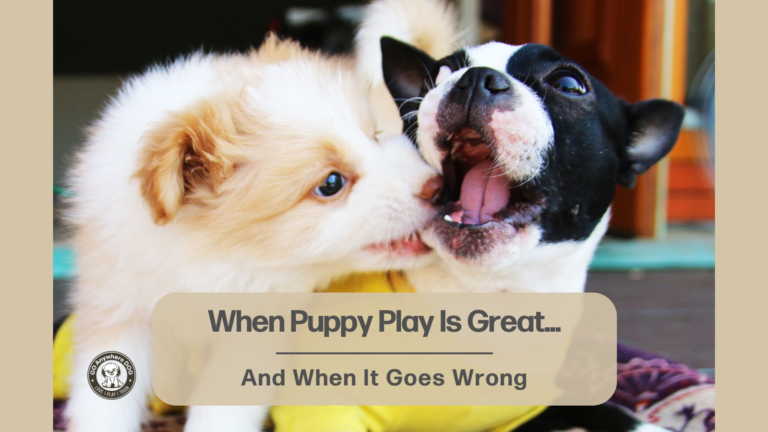
Puppies skip all of it. Exuberant puppies launch themselves straight at the face. It isn’t rude. They simply haven’t learned the dog-approved version yet. That’s what they’re here to learn.
Your adult dog’s patience has a clock on it
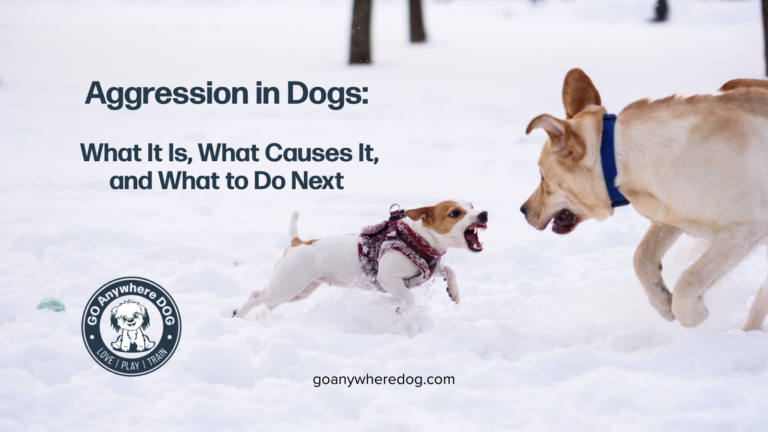
Here’s the catch. Dogs beyond about two years old often don’t tolerate that face-launching, and some will get very mad about it.
That isn’t your dog being mean. It’s development. Between 18 months and two years, dogs reach social maturity, and three things change: they play less, they get more selective about their playmates, and they get less tolerant of antics they don’t like. (That framing comes from Jean Donaldson and The Academy for Dog Trainers, where I trained.)
So a puppy bouncing on the face of a mature dog is a mismatch in the making, even between two good dogs. Adult dogs don’t always appreciate puppy siblings right away. It’s our job to manage things so they both come to enjoy each other.
How to manage puppy and adult dog together
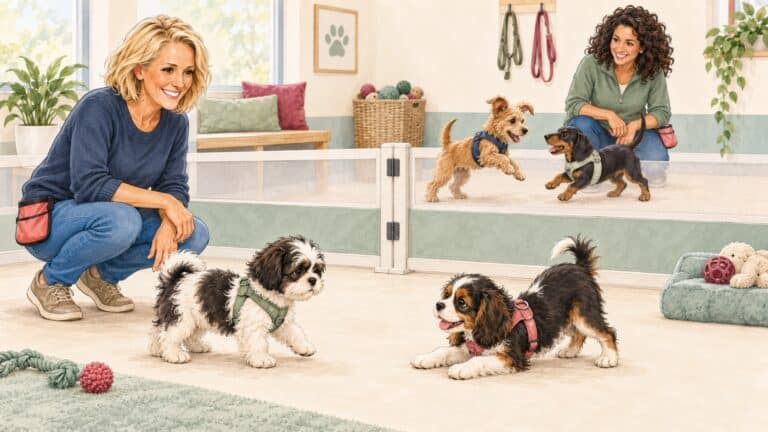
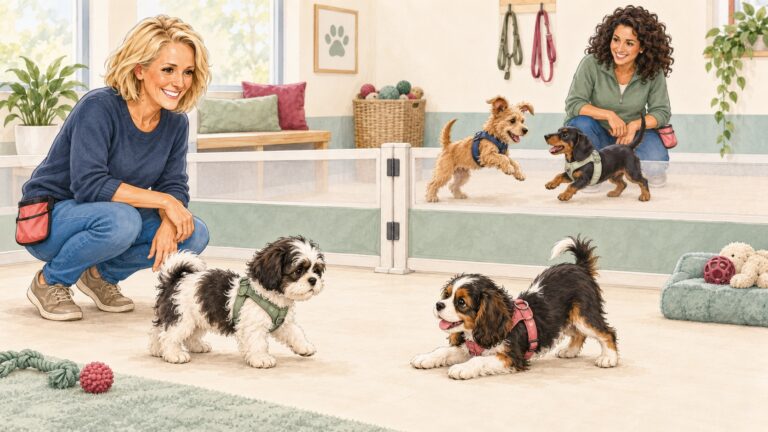
Supervise like it’s a four-year-old with a new baby sibling. When they’re together, you’re present: ready to redirect, to step in, or simply to watch for good play.
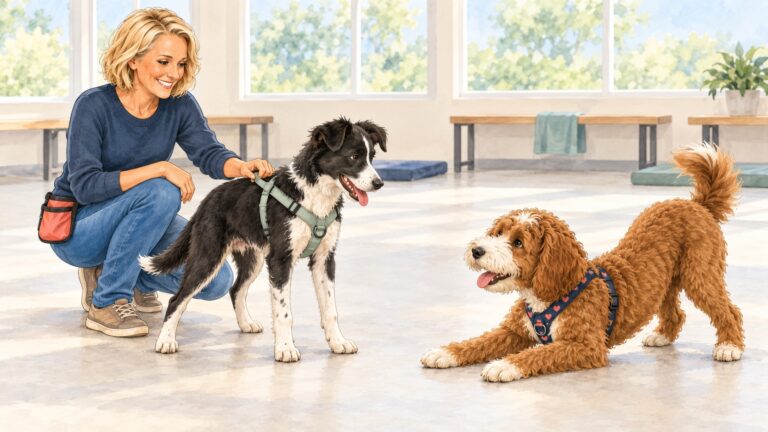
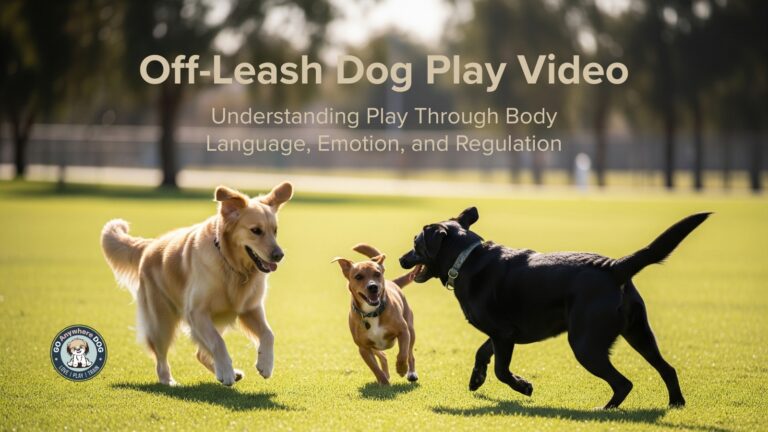
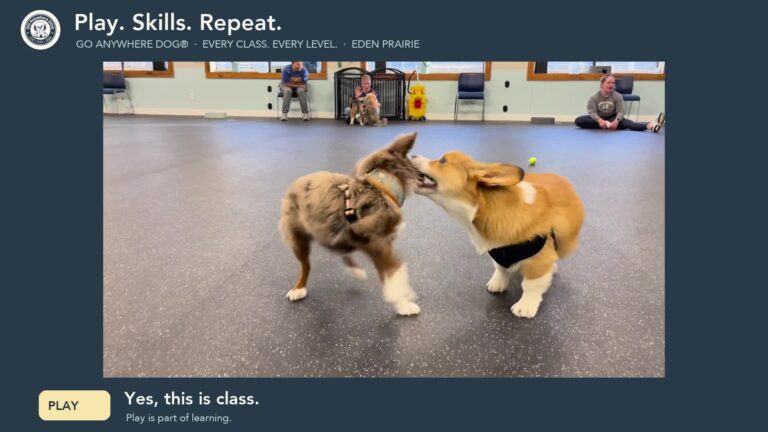
Run a consent test. If you’re not sure both dogs are enjoying it, gently hold back the one who’s coming on strongest for a few seconds. The other dog gets to vote with their feet. Walking back in, offering play signals, means yes, I was having fun. Walking away or using the chance to leave means no, I’m done for now, and that’s a perfectly fine answer. The consent test comes from Jean Donaldson; here’s how we use it in every class.
One thing to know about little ones: they don’t always make good choices. Play is their whole language, and all social mammals want to belong, so some puppies dive right back in every time, even when they’re getting flattened. Watch beyond the test. A puppy who keeps getting rolled, pinned or held down too long may need a gentler playmate for a while.
Puppies and adult dogs get their own section at our Feb 21 seminar for foster homes and rescues: what a puppy under 6 months needs from the grown-ups in the house, and what your resident dogs shouldn’t be asked to tolerate, on real video. See the Feb 21 seminar →
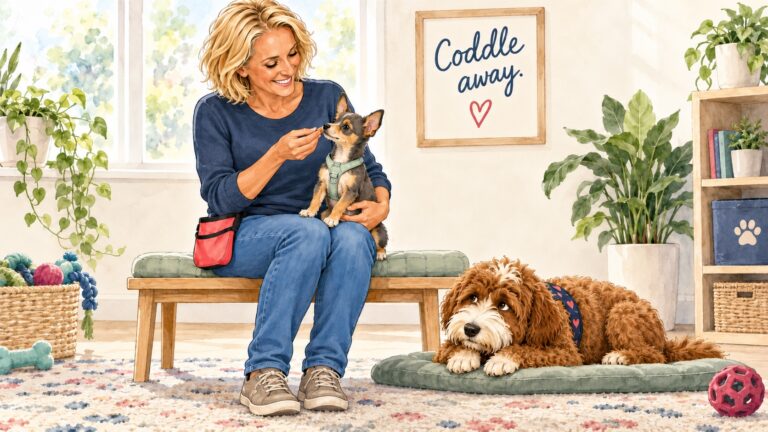
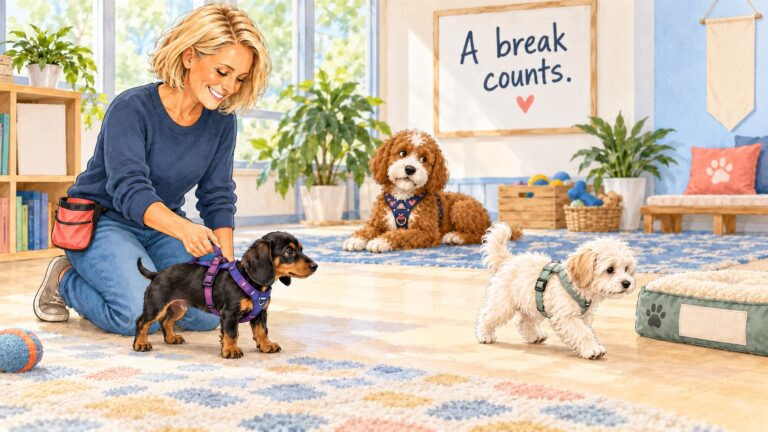
Build in solo time. Sometimes the puppy gets one-on-one time with you while your adult dog rests. Sometimes your adult dog gets you all to themselves while the puppy naps in their pen or crate. Everybody needs a break from everybody.
If your adult dog growls at the puppy: that’s your dog using their words, the only ones they have. Never punish the growl. Happy-talk the puppy away, give your adult dog some space, and thank them for telling you.
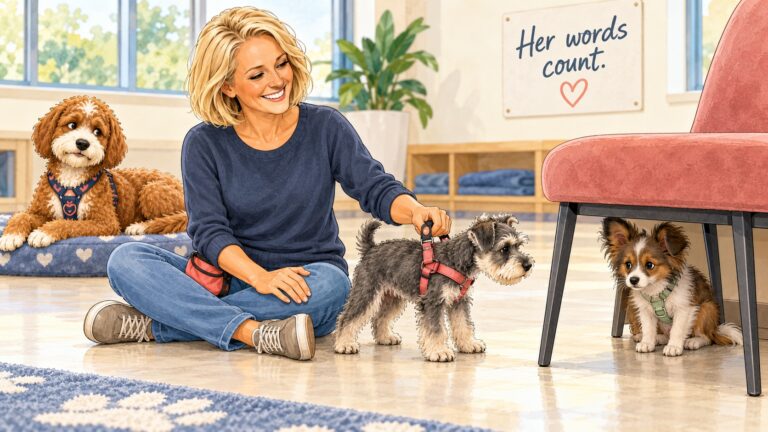
If your puppy is the scared one: sit on the floor beside them. You’re the safe space. If another dog comes over, interact with that dog and gently hold them back, arm extended away from your puppy. Over and over, your puppy learns closeness doesn’t have to mean in my face, and my people have me.
You’re holding their whole window
This is the part I most want foster parents to hear.
Puppies form their lifelong expectations about the world in the first few months: people, places, sounds, surfaces, other dogs. The American Veterinary Society of Animal Behavior (AVSAB) calls the first three months of life the primary and most important time for puppy socialization. Your foster puppy may spend most of that window with you.
Sniffaris, and experiencing the world without performance pressure as much as you can, are the most important thing you can do. It will affect this puppy’s entire life.
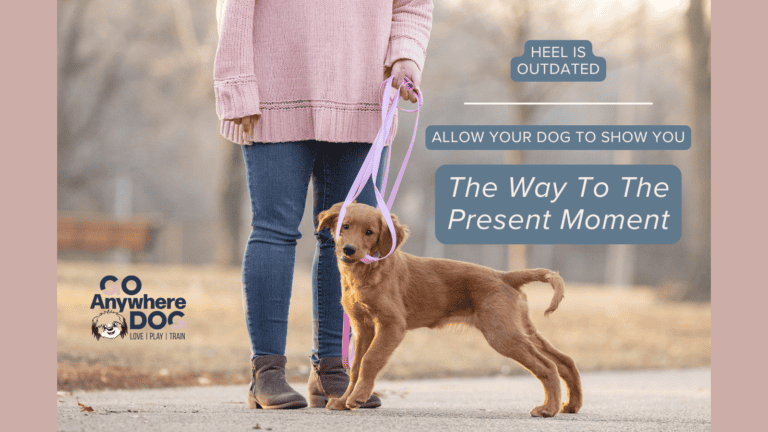
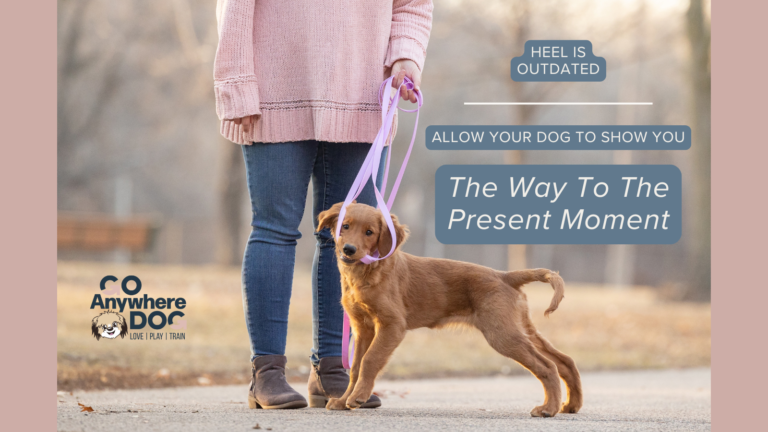
A sniffari is simple: put your puppy in charge of the walk. Let them sniff everything, choose the pace and the route, and discover for themselves that the tree stump, the trash can and the man in the hat are no big deal. No heeling, no “come on, let’s go.” Just the world, one sniff at a time.
When your puppy startles, happy-talk and feed, feed, feed. If they want to back away, back away with them. If they freeze, get down on their level and stay with them until they feel safe enough to move. It’s always okay to comfort a scared puppy.
About quarantine and outings
Start outings once your puppy is out of quarantine, per your rescue’s guidelines. Rescues set those rules for real reasons, and your coordinator knows your puppy’s health history.
Beyond quarantine, AVSAB’s position is clear: it should be the standard of care for puppies to receive socialization before they’re fully vaccinated. They note puppies can start socialization classes as early as 7–8 weeks, with a minimum of one set of vaccines at least seven days before the first class and a first deworming. Their reason is stark. Behavioral issues, not infectious disease, are the number one cause of death for dogs under three, and behavior problems are the number one reason dogs are surrendered to shelters.
Read the full statement (it’s two pages, free to share): AVSAB Position Statement on Puppy Socialization
Rescue folks, this one’s for you too. Many don’t know this statement exists. It’s worth a look when you write your foster puppy policies.
Bring your foster puppy to class
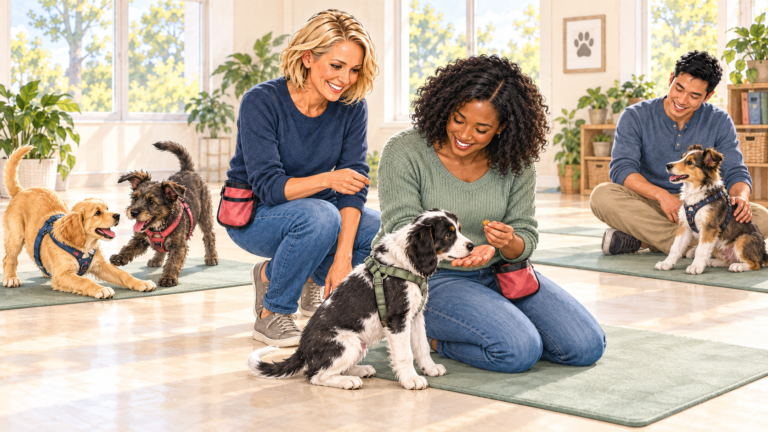
Yes, foster puppies are welcome in Puppy & Me. Some rescues have even covered the cost for their fosters. Ask yours! Puppy & Me →
Questions foster parents ask
When can a foster puppy go on outings?
Once your puppy is out of quarantine, per your rescue’s guidelines. Beyond quarantine, AVSAB’s position is that puppies should get socialization before they’re fully vaccinated, starting as early as 7–8 weeks, with at least one set of vaccines seven days before the first class and a first deworming.
Why doesn’t my adult dog like my foster puppy?
Puppies haven’t learned dog etiquette yet and launch straight at faces. Dogs past social maturity, around 18 months to two years, play less, get choosier about playmates and tolerate less. The mismatch is development, not a mean dog.
Is it okay if my adult dog growls at the foster puppy?
Yes. The growl is your dog using their words. Never punish it. Happy-talk the puppy away, give your adult dog some space, and thank them for telling you.
Can foster puppies come to puppy class?
Yes. Foster puppies are welcome in Puppy & Me at Go Anywhere Dog, and some rescues have covered the cost for their fosters.
Jody & your Puppy Life Coaches
Sources
- American Veterinary Society of Animal Behavior. AVSAB Position Statement on Puppy Socialization (2008). avsab.org
- Jean Donaldson / The Academy for Dog Trainers: social maturity changes and the consent test. academyfordogtrainers.com