In This Video
Jody's top 10 energy burners for social dogs, so your dog can be a welcome guest wherever you go: dog daycare, dog parks, fetch, tug, Frisbee, running, chase games, find-it scavenging, work-to-eat puzzle toys and training games. Along the way: why tug is safe to play (and fine to let your dog win), how to keep a favorite toy high-value, and why experimenting to find what brings your dog joy is half the fun.
Key Moments
- 0:01 — Welcome, and why energy burners matter
- 0:33 — Life with a social dog
- 1:04 — 1. Dog daycare
- 2:07 — 2. Dog parks
- 2:37 — 3. Fetch
- 3:08 — 4. Tug-of-war, and why it's safe to let your dog win
- 4:09 — 5. Frisbee
- 4:42 — 6. Running
- 5:13 — 7. Chase games and lure coursing
- 5:43 — 8. Find it: scavenging
- 6:13 — 9. Work-to-eat puzzle toys
- 7:14 — 10. Training games
- 7:44 — Experiment to find what brings your dog joy
Full Transcript
Hello and welcome. I'm Jody Karow, Dog Life Coach and founder of DogSense Online, where we're committed to helping you live a better life with your dog. I learned all the things I share with you first by living a better life with my personal dog, Buddha, and then applied them to caring for thousands of dogs just like yours attending our doggy daycare and training programs.
Today we'll cover my top 10 energy burners for social dogs. Life with your dog in 2015 is awesome. Dogs are welcome to come along with you to the café, the music festival at the park, hotels, the beach and even many dog-friendly shopping places. I've attended local pubs, wine events, festivals and many other activities specifically designed for getting out socially with my dog Buddha, all of which have helped greatly in kicking doggy home-alone guilt in the keister.
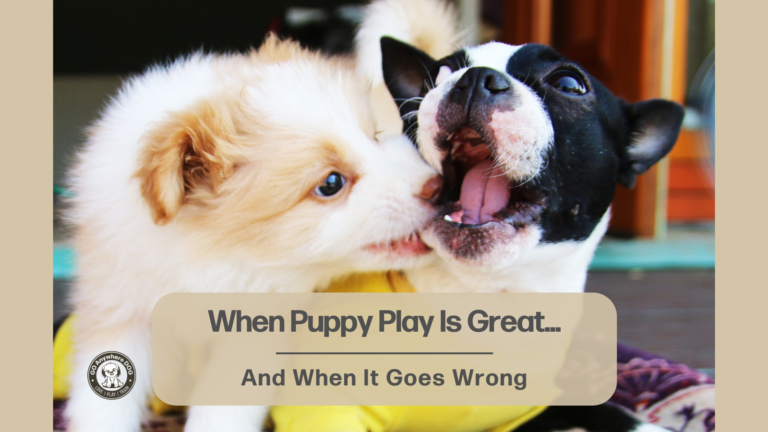
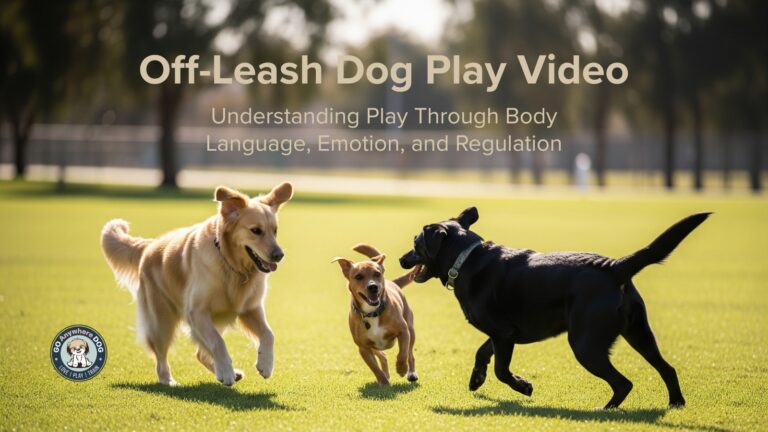
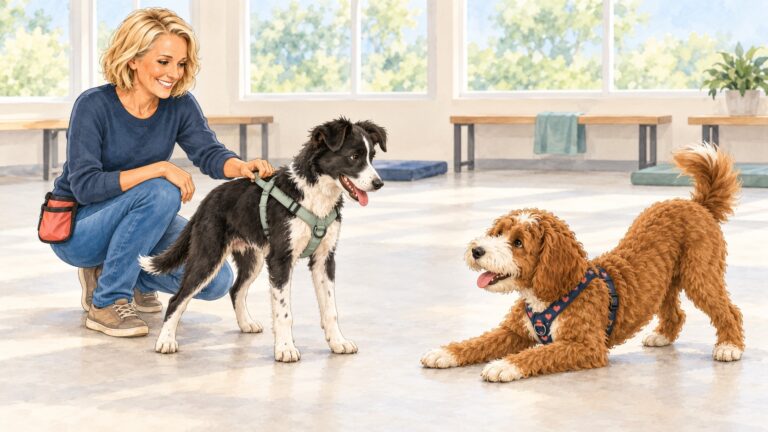
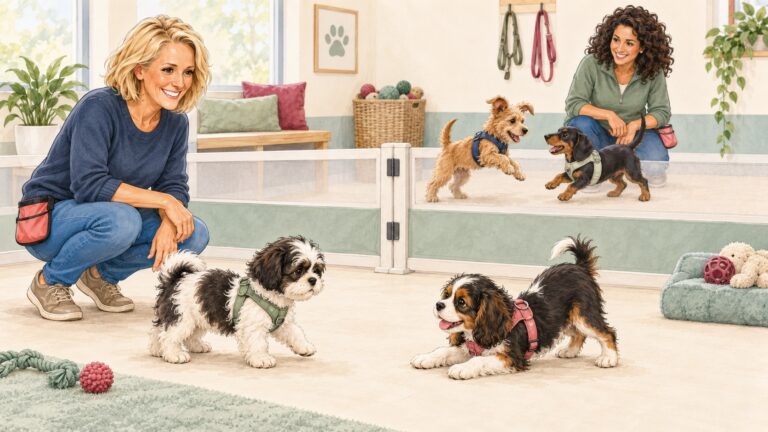
Okay, here are my top 10 energy burners for helping dogs be welcome guests anywhere you want to go. Dog daycare quickly became my top pick. Buddha loved playing with other dogs more than anything else. I have yet to find anything comparable to playing with dogs for burning off some energy. Of course, I loved it so much that I went on to open a doggy daycare of our own, and our customers were as elated as I was with the results. Especially for those days you'd love to bring your dog along to one of the kids' soccer activities, or you've got plans to attend one of your local dog-friendly events for socializing with other dog lovers, a day of play with friends at doggy daycare will give you the best results for a pleasant social outing for you both. Be sure to visit various daycares in your area. Not all are the same; choose the one that you feel fits your needs best.
Dog parks achieve the same, but will require some time on your part. Even 20 minutes at the dog park playing with doggy friends can burn some of that exuberant energy. Dog parks are social activities too, where your dog will need to have some manners, so do be conscious that if your dog has been cooped up all day, he may need a little energy burn to be a good player and friend. Each dog is an individual, and knowing how to set your pup up for success is part of being a great dog parent.
Fetch is a game most of us dog lovers learn quite quickly. Most dogs love to chase after anything that flees, and running burns that energy fast. Most dogs pick up quickly that returning the ball to you is what brings it to life again, flying through the air for another run. If your dog doesn't pick this up right away, avoid going to get the ball yourself early on. Dogs do what works. If it works to leave the ball and the game still continues, your dog will have you trained in no time to go fetch the ball yourself.
Tug-of-war. With a stuffed or rope toy, your dog will pull and tug, play-growl and shake his head. He'll use every muscle in his body in attempts to get the toy from your grip. Once he's achieved it, he'll stop and look at you as if to say, “Come on, let's play again.” You may have heard some people say playing tug is risky, as it could make your dog aggressive, or others say you must never let your dog win. This is pure silliness. For the dog that gets over-amped, it's good during tug games to teach him some rules of the game, like when to stop or drop, but even this is rarely necessary. I've played tug with thousands of dogs and let them win; not one has shown the problems those people are concerned about. For many dogs, it's their absolute favorite game.
Frisbees swirl through the air and fly far. Again, this brings out your dog's natural chasing behavior. I see people get some fantastic distance with their Frisbees, much further than I can throw a ball. Not all dogs take to the Frisbee, though. Some will chase after it but not catch it or pick it up and bring it back. Many dogs can be taught to catch it in midair, which is a lot of fun for you both. It'll just depend on how much effort you personally want to put into it.
Running. What young dog doesn't love to run? If you're a runner yourself, this is a terrific way to spend time with your pup while you both get some high-impact exercise in. Just like you would for yourself, you'll want to gradually work up in distance. If you plan on frequent and long-distance running, consult with your veterinarian to make sure your dog is up for this rigorous level of exercise. Be mindful after each run of how your dog's joints are holding up, and make sure you're feeding an optimal diet to fuel your pooch's athletic body.
Chase games. This one has always been Buddha's absolute favorite. At home we use the Chase-It. He sees the squirrel and after it he goes; he will run and run. I keep it in the closet when we're not actively playing. This keeps its value high: it's not always available to him, so he never gets bored with it. After I discovered Buddha's pure love of the chase, we found some local places that offered lure coursing for fun. Who knew a little Shih Tzu would be so keen for the hunt? It has never stopped being his greatest joy in life.
Find it. Dogs are natural scavengers. The latest discoveries in science suggest that less-fearful wolves domesticated themselves by scavenging off nearby settlers' trash. Giving your dog a permissible outlet for scavenging will undoubtedly bring him great joy and keep him busy. Scatter snacks out in the yard or throughout some spots in the house. Make sure he doesn't see where you've hidden the snacks, then let him into the area and watch him follow his nose. When our Minnesota winters get too cold for outdoor fun, this is my go-to for helping the dogs through the indoor blues.
Work-to-eat puzzle toys. Another way to help out during poor-weather blues, this also works as your easy button for burning some of that plentiful doggy energy every single day. More and more work-to-eat toys continue to hit the market, and variety helps stave off boredom from the same old thing every day. Many of us choose to never put our dog's breakfast or dinner in a bowl. With these toys, you're able to add some mental challenge to consuming those meals. It's great fun for your dog, and some passive energy burn that requires less energy from you.
Training games. Speaking of mental energy burn: training games keep your dog's skills sharp and require focus, impulse control and problem solving. Many people overlook the fantastic amount of energy burn you'll achieve through playing training games with your dog. I too had no idea, when Buddha was young, of the many huge benefits of turning training into fun games you play with your dog every day. Building your pup's focus and impulse control will teach your dog alternative ways to get out some of those ya-yas.
Every dog is an individual. Early on, you'll want to experiment with lots of different toys, activities and games. Discovering what clicks for your pup and brings him great joy is loads of fun. Make time for any of these activities before you go out, and you'll help your dog succeed. A socially savvy dog enjoys a full and enriched life, opening many doors for your dog to join you in many pleasures.
Watch your inbox for your next video: the number one skill you must master for your social dog. You won't want to miss this one. Our dogs are living social lives among men, women, children and other animals. If we want them to be sociable, it's important we teach them without stressing them out. I've learned many tips and tricks for keeping both humans and dogs happy living a social life, and I look forward to sharing more of them with you.
If you enjoyed this video and found it helpful, share it with your dog-loving friends. It takes a village; all of us working together make our communities better for people and dogs. Now tell me in the comments below: what is your dog's favorite energy-burning activity? I'll be replying to your comments, and your idea may be chosen for one of our future videos to help dogs and people live better lives together. Most importantly, until next time, have fun and enjoy your dog.