In This Video
Jody and Ron give you the full lowdown on training treats: why food is the fastest way to build new behaviors, which real foods dogs go crazy for (string cheese, hot dogs, chicken, lunch meat, meatballs), why soft treats beat crunchy ones, how to cut pinky-nail-sized pieces fast, and how a treat pouch and a squeeze tube of cheese make your reward delivery quick and smooth. Value to your dog matters more than ingredients.
Key Moments
- 0:00 — Why food works best for teaching new behaviors
- 1:21 — Real food dogs love, and why it's economical
- 2:33 — Too excited? Downgrade the treat
- 3:03 — Meatballs, and soft vs. crunchy store-bought treats
- 4:37 — Break treats small, even for big dogs
- 5:39 — How to cut hot dogs and string cheese fast
- 6:10 — Prep a week of treats on Sunday night
- 7:10 — Baggies and the treat pouch
- 9:18 — Squeeze tubes of cheese
- 11:21 — Make it something your dog truly loves
Full Transcript
Hi, my name is Ron. And I'm Jody. And we're here today to talk to you about training treats. We're going to give you the whole lowdown about treats, about portions and things like that.
Now, Jody, why do you often use food for training? I'm big on using food in training just because it's the easiest, I find, for teaching new behaviors. When you're first building new behaviors, I use food because I want to do a bunch of repetitions of that particular behavior, and food is the fastest. It's the most effective for rewarding really quickly each time they do a repetition. When I get to where I'm taking these behaviors on the road, using them in real life, then I'll switch over to real-life rewards; I'll start using toys and stuff like that in training. But when I'm first teaching sit, or down, or just getting a behavior up and running so my dog knows what to do and when to do it, I'm going to use food pretty much every time.
I know for my puppy, at least, food is the biggest motivator there is. It really is, and I think it is for most dogs. Well, isn't it for us too? I like food!
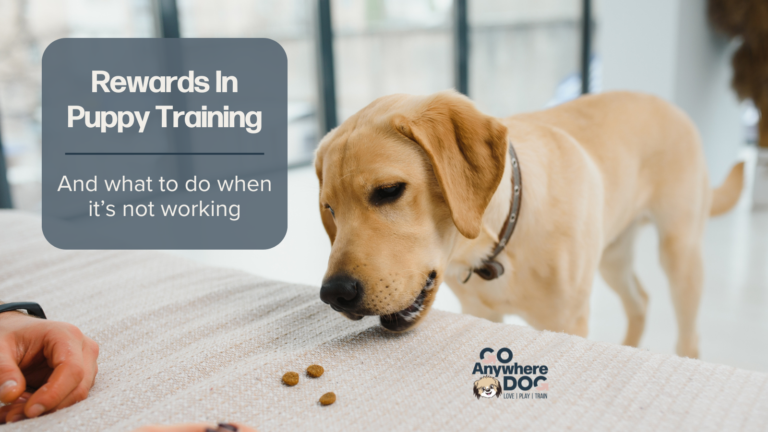
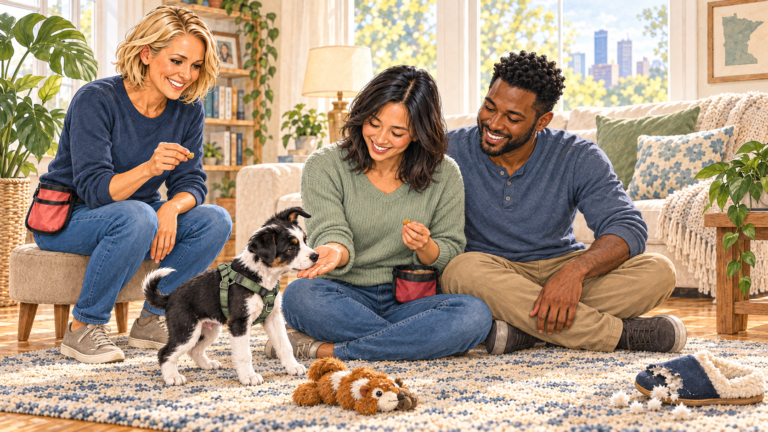
So, speaking of food, tell me about portion control. How do you cut these up? What do you use? Personally, I use a lot of human food, the real deal. I find that dogs absolutely love it, and it's actually way more economical. I use anything from string cheese (a lot of dogs absolutely love string cheese) to hot dogs and chicken. Chicken breast is a big hit with a lot of dogs. So is lunch meat: you can use roast beef, turkey, ham.
Experiment with your dog. Find out which thing your dog really goes crazy for, wagging that tail like crazy, and have fun figuring out what makes your dog tick, what fills your dog with great joy. Because the more joyful they are, and the more crazy they are about the reward you're giving them, guess what? The longer they're going to play our silly little games, and the more excited and motivated they are.
Which actually brings up something else. If you find that you're using a particular training treat and your dog is a little too motivated, so excited they're just bouncing all over the place, then you might actually want to downgrade a little, so that they're a little calmer and able to focus. So you're going to want to experiment. Every dog is different; every dog has different taste, just like we do. So find out what works for your dog.
These are meatballs. You can pick these up at your local Costco or Sam's Club; Aldi even has them. They come in the frozen section in a bag full of precooked, ready-to-go meatballs. You pull some out of the freezer, they defrost really fast, and you'll be able to cut them up and be ready to go.
And you can always buy treats too. If you buy training treats at the store, I really recommend going with soft, chewy treats. I prefer them over crunchy treats just because typically they're higher value; dogs really like soft, chewy treats. Crunchy treats also take them longer to chew up, whereas with something soft they chew a couple of times and swallow really quickly. I like that because one of the things we want to do when we're teaching a new behavior is pound out rep after rep, and that allows us to give that reward and go right on to the next one. When I give my dog a crunchy treat, she's on it forever, and that could really prolong your training.
So I like to use those if I get store-bought treats. A lot of times, even with these here (you can see they're actually really small little treats), I still break these up into even smaller pieces. I might break them in half if I'm training a Lab or a pittie, that size of dog. If I'm training a Pomeranian or a miniature poodle or one of our little ones, I'll even break these into fourths. I'm just trying to give them a reward, which is a taste.
So those are the different options you can use. Now let's show everyone how to cut some of these up. Ron, you grab the string cheese; I've got a hot dog here. When you're cutting up a hot dog or string cheese or anything long like this, you cut it the long way in half first. Then you flip it partially and cut it again the long way, which has it quartered. Then you switch it over and start cutting, so that each cut gives you four little tiny pieces. Real quick, real easy.
The other thing I recommend is that you have a time set in your week, maybe Sunday night, the last thing you do before you start your work week, to cut up a whole bunch of training treats. Have yourself prepared, because when you're prepared, you're going to train more often. If I can just grab a baggie out of the fridge, I'm much more likely to actually do more training.
So let's show them. We have really small little pieces here. Literally about the size of your pinky nail, no bigger than the top of your pinky nail. That's all the bigger you need it. Just cut them all up into really small pieces like that.
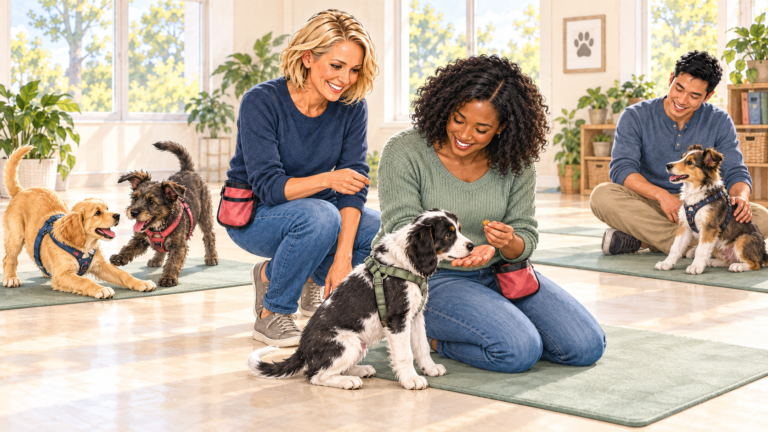
I like to use plastic baggies. All of my training treats get cut up and put into plastic baggies, so I'll have string cheese in a baggie, hot dogs, chicken; I have all of my assortment. Then, the treat pouch. You don't want to have a dog and not own a treat pouch. Very important. If you want your dog to give you good behaviors, you have to teach them the right behaviors, and the more you reward those right behaviors, the more you're going to get them in life. In training, it just makes things a lot easier. Remember, you're going to be giving hand signals to communicate to your dog what you want, and you're going to have your other hand ready to grab those treats and dish out those rewards.
You don't want to be trying to figure out how you're going to hold them. Pockets: are they gappy enough to be able to dig them out? A treat pouch truly helps with that, because you're trying to coordinate all those little hand-eye coordination things, and it really helps the organization of it. It simplifies everything. So with my treat pouch, all I do is go to the fridge, grab my training treats, and put them in. I have my plastic baggies in here, which keeps my treat pouch clean, so I'm not having to clean it out. Quick, simple and easy. I'll have that on my hip, and as you can see, I'll even have the baggie open in there, so I can really quickly grab that treat, give my hand signal, give a reward and move on to the next one.
One other thing I absolutely love to use in training, one of my favorites that I'm going to share today, is squeezy cheese. These are squeeze tubes. They come in a couple of different kinds. I'm really partial to this one; it's a go-to. This other one has a cap on the side, and some dogs kind of spook at the cap. When you have it open, it comes out a little differently, and that little thing blowing forward can spook some dogs. So I'll use that one sometimes, but this one I usually don't have any issues with.
I just twist off the top, and as soon as the dog gives me the correct behavior, I squeeze out a little bit, bring it forward and give them a lick. They just get a lick, and they absolutely love it. I personally have not come across a dog yet that doesn't love it. I've seen you in action with these; it's very quick and effective. And it's actually easier than grabbing something out of my treat pouch; there are those extra couple of seconds. Squeeze tubes are a wonderful training tool.
I get these at REI; I'd imagine they have them at any camping store. That's what they're actually for: squeeze tubes for packing when you go camping and climbing. They're refillable. I just get good old squeezy cheese, the kind you used to put on your crackers when you were a kid. This end slides off and opens up, I squeeze my squeezy cheese in there, close it up, and it's ready to go and ready to train. When I'm done after a training session, the whole thing gets thrown in the fridge.
So that's basically it. That is what I use. Just make sure that it's something your dog really loves, so that both of you have a wonderful time training together. You want training to be a great joy for your dog and a great joy for you, because if it is, you're going to have fun, and you're going to do it more often. And that's what's important. That's great, thanks, Jody. Absolutely.