Women Don’t Need to Be “Alpha” —
They Need to Be Themselves
Women are told more than anyone:
“You’re too soft.”
“You need to be tougher.”
“Your dog is dominant.”
“You need to show who’s Alpha.”
And every woman who has ever doubted herself because of those words deserves to hear this clearly:
You do NOT need to dominate your dog to raise a confident,
well-behaved companion.
Dominance-based advice is outdated, disproven, and deeply misaligned with how dogs — and humans — actually learn.
The relational skills many women have been encouraged to practice—attention, responsiveness and noticing what someone needs—are useful here. They are skills we can all develop.
The Old Dominance Model Was Never Designed for Women — or Dogs
The original “Alpha” theory came from wolves in captivity — not dogs in families.
Even the wildlife biologist who once popularized the alpha wolf idea later clarified that in the wild, wolf packs function as families and not as dominance hierarchies.
Dogs don’t organize into dominance hierarchies with humans.
They organize into relationships.
Useful relational skills include:
attunement
empathy
emotional intelligence
connection
clarity
intuition
relational leadership
These are superpowers in dog parenting — not weaknesses.
Aha moment 1:
All Mammals Learn Safety Before Obedience
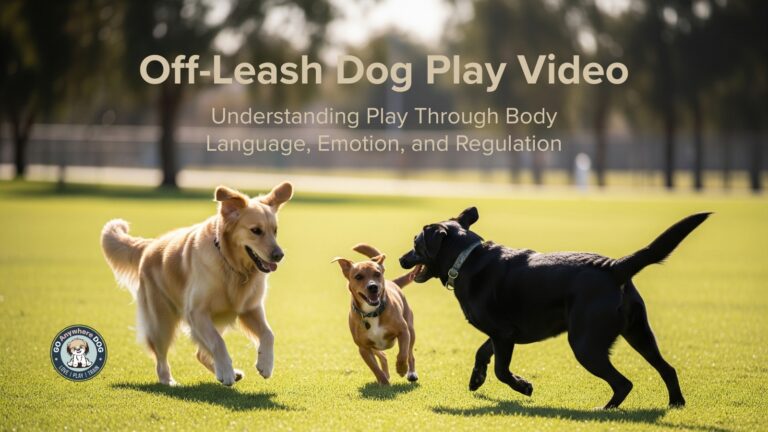
Modern dogs live in a social world alongside humans:
patios
parks
gatherings
family events
travel
visitors
busy environments
You cannot intimidate a dog into emotional safety. Fear can teach avoidance and defensive responses. We want the experience to teach connection, usable skills and a safe way through difficulty.
The real sequence is:
Safety → Connection → Learning → Skills
When dogs feel safe, they:
listen
regulate
cooperate
learn quickly
retain skills better
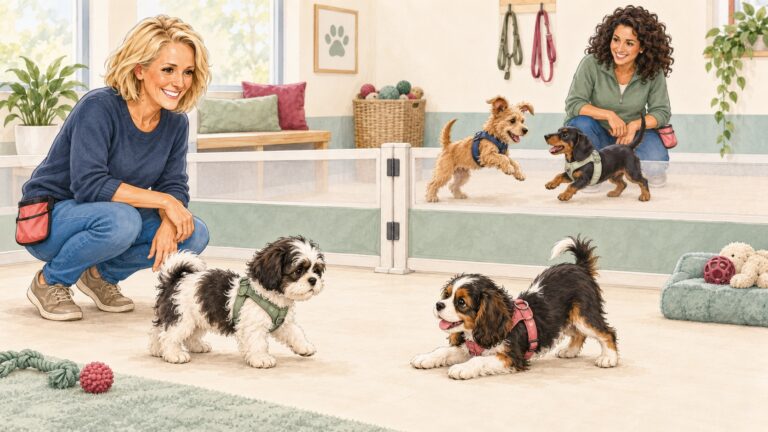
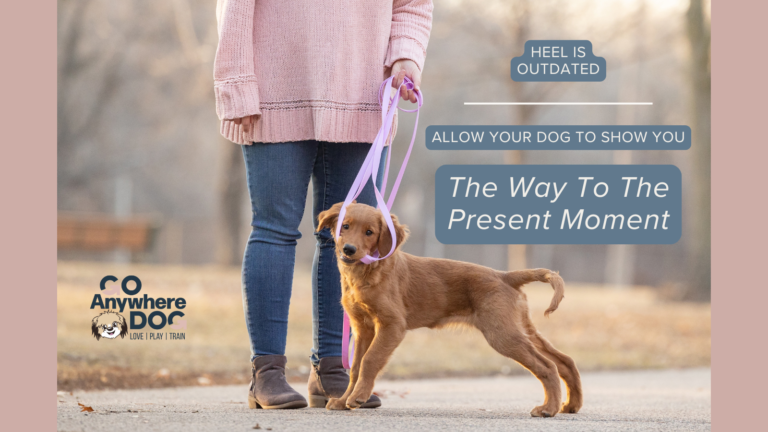
Responsive teaching gives the puppy a person to turn toward, and gives that person something useful to do.
Aha moment 2:
Your Puppy Is Always Learning — Not Just When You Think You’re Teaching
Your puppy is learning from every moment, not just training sessions.
To illustrate, I show new puppy parents the Phone AHA:
You raise your phone to take a cute photo…
Puppy immediately runs away or looks panicked.
Why?
Because they’ve already associated:
Phone up = human stops engaging.
It wasn’t “bad behavior.”
It was intelligent associative learning.
Many people recognize this immediately: experiences teach meaning long before the learner can explain it.
Once you understand this, training becomes play, shaping, and curiosity instead of frustration.
Aha moment 3:
The Carrot Isn’t Soft — It’s Science
Let’s reclaim the metaphor:
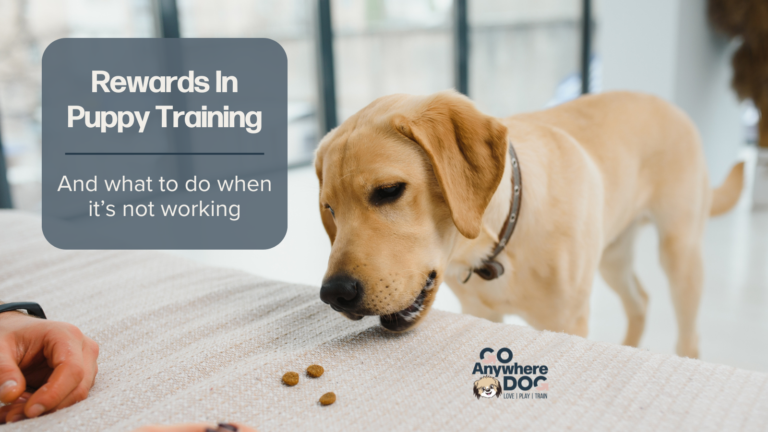
Carrot = teaching through what feels good
(rewards, praise, play, access, connection)
Stick = teaching through fear or intimidation
Both approaches change behavior.
But they do it very differently:
The Carrot builds confidence and trust.
The Stick builds fear and suppression.
Reinforcement gives us a practical way to build the response we want. Clear limits and thoughtful follow-through belong alongside it.
This is the approach used in:
modern child development
trauma-informed education
leadership and management
neurobiology
therapeutic environments
Why wouldn’t we use it for dogs?
Aha moment 4:
Boundaries Without Trauma℠ — A Woman’s Leadership
Clear, responsive leadership includes:
boundaries
structure
routine
clarity
connection
relational teaching
Boundaries are not dominance.
Boundaries are guidance.
When you mix:
structure
repetition
clarity
compassion
You get a dog who:
listens
respects your cues
trusts you
stays regulated
adapts well socially
becomes confident
You do not have to perform toughness. You can learn to read the moment, hold a limit and help the learner through it.
A clear boundary and a helping hand can belong in the same moment.
Training Tools That Fit a Woman’s Style
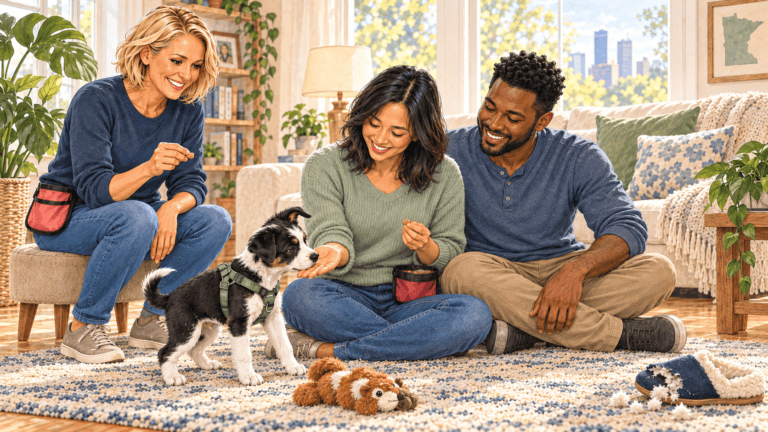
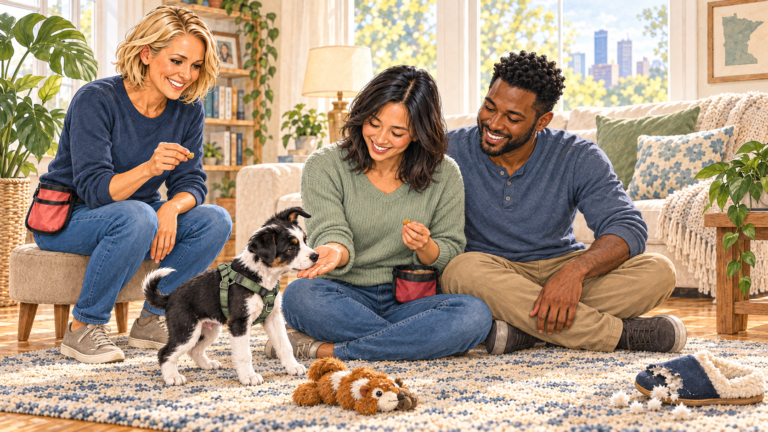
Treat Pouch
Makes consistency effortless — no bribery, just clarity.
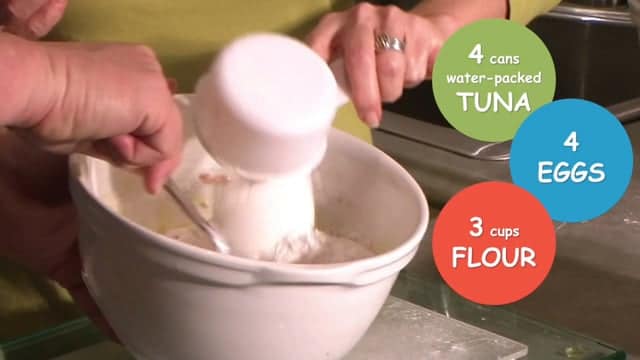
Tuna Fudge Training Treats
Dogs adore it. Women appreciate the low mess.
Squeezy Cheese Tubes
Your best friend for:
recalls
confidence exercises
It’s motivation in a tube.
A Woman’s Way Works — Stand Proud
You do not need to imitate a dominance performance. Learn to notice, respond, teach and follow through. Warmth and a clear limit can travel together.
The truth?
Women make extraordinary dog parents — because we lead with emotional intelligence.
Your dog doesn’t need an Alpha.
Your dog needs you:
consistent
compassionate
confident
clear
attuned
loving
regulated
A woman’s way is humane.
A woman’s way is modern.
A woman’s way is powerful.
Stand proud.
Your dog is lucky to have you.
Puppies starting under 16 weeks begin in Puppy & Me, and dogs 16 weeks to a year start in Life Skills 101 — both at our Eden Prairie school. For dogs of any age, we also come to you with in-home training.
Until next time, have fun and enjoy your dog.
— Jody & your Dog Life Coaches

Frequently Asked Questions
No. Your puppy needs clear teaching, appropriate limits and someone who notices when they need help. A dominance performance does not build those skills.
We teach you to read the puppy, arrange practice they can manage and follow through without pain, fear or intimidation.
No. Permissiveness means needed limits are absent. Positive reinforcement describes a consequence that makes a behavior more likely. We use it deliberately to build and maintain skills; it also happens between lessons.
GAD pairs reinforcement with protection, clear expectations and appropriate consequences. For a missed cue, a brief loss of desirable access comes after relevant fluency and a check of present capacity. Protection and social boundaries begin from the start.
Clear limits, usable skills and a person who knows how to help. Confusion calls for teaching. Distress calls for support. A fluent response competing with something wonderful can call for an appropriate consequence.
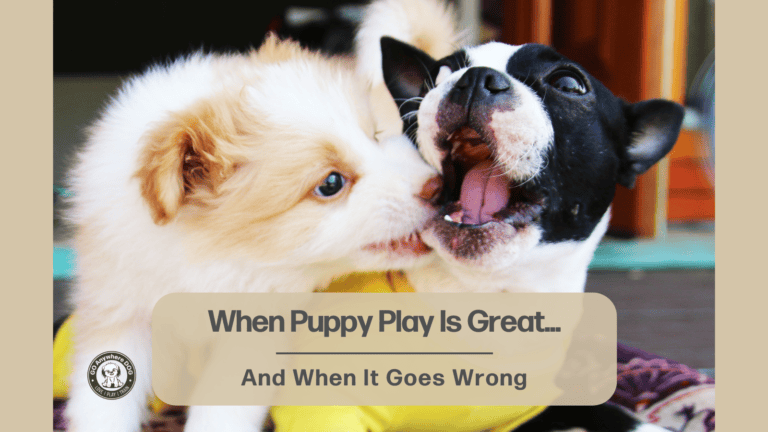
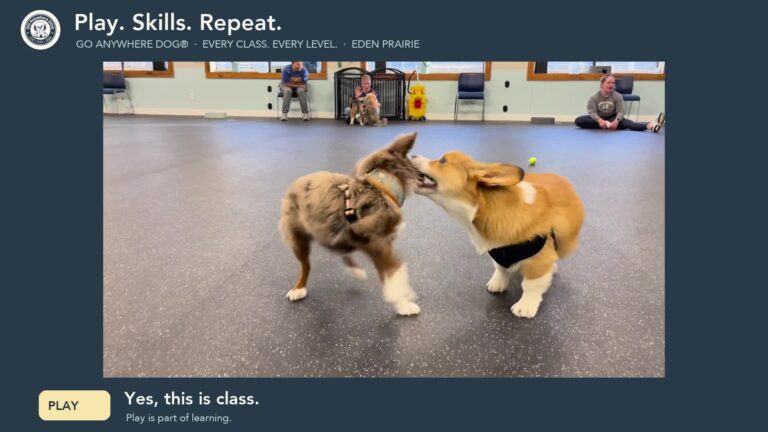
We stop unsafe interactions, pause rough play and use brief, appropriate loss of access without adding pain, fear or intimidation. A time-out can give both ends of the leash breathing space. A parent joins when their presence can comfort; sometimes an upset adult needs a break too. We read the dog, the human and everyone sharing the room, then arrange a better next attempt.
See the complete GAD methodology.
A familiar response can be harder in a new setting. Check how much practice it has here, whether your puppy is upset and what else is paying. A squirrel can make a very persuasive offer.
Make the next step manageable: less distance, fewer distractions, useful reinforcement and room to recover when needed. We build reliability in the places life will ask for it.
Arrange manageable experiences where your puppy can explore, choose, get help and try again. Early repetitions help build the expectations they bring to the next encounter.
You cannot prevent every bad experience, and a bubble is not the goal. When something difficult happens, provide safety, support and connection, then help your puppy recover. Supported recovery is part of building resilience. Our coached classes let you practice those decisions while real life unfolds in the room.