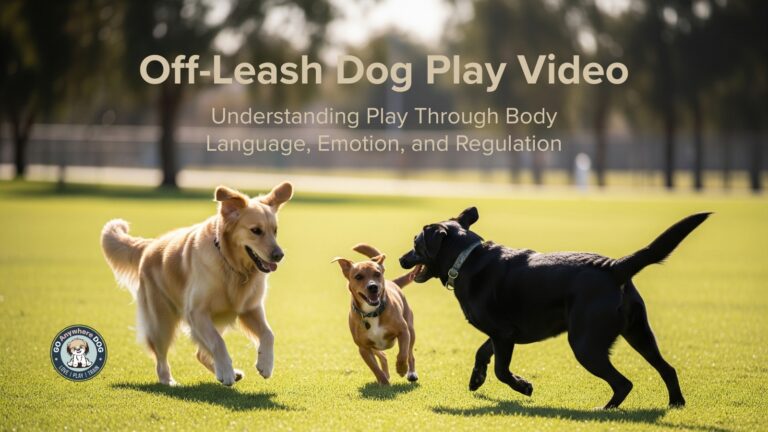
In This Video
Body language is the clearest window into how your dog is feeling and coping. Because dogs do not have words, they communicate through posture, movement, facial expression, and other signals—sometimes subtle, sometimes obvious. You’ll see why a single tongue flick, freeze, or whale eye cannot tell the whole story. The surrounding details matter: where the tail is held, whether the body is tense or loose, and what the ears are doing. When a dog shows concern, the first goal is to back off and reduce stress, not challenge or intimidate. With repetition and practice, you can recognize stress, identify what is causing it, and make a plan that helps your dog cope with fear, frustration, or anger.
Key Moments
0:05 — Body language is the window into how your dog is feeling
0:48 — Your dog is always communicating in the only way they know
1:20 — Subtle and not-so-subtle body-language displays
6:48 — Why one tongue flick cannot tell the whole story
7:13 — Read the tail, body tension, and ears together
7:50 — Reduce stress first, then identify triggers and make a plan
Video companion: reading the whole dog
0:00 — [Music]
0:05 — Body language is the window of truth to how your dog is feeling. We all care deeply about how our dog is feeling or coping in any situation. We also care about our dog’s safety and the safety of those around our dog. Dogs don’t have words to tell us how they’re coping at any given moment, and as humans, we’re often left frustrated trying to understand the furry species that’s made his way into our home, our hearts, and oftentimes our beds.
0:37 — Understanding your dog’s body language will keep you out of frustration and in tune with your dog’s emotional state in any given situation.
0:48 — Your dog is always trying to communicate to you how he feels at every turn, in his doggy way. The only way he knows to communicate this to you is through his body language. After spending time chatting with thousands of dog lovers over the years, I know one thing to be absolute truth: all of you who love a dog care about how your dog is feeling or coping, but oftentimes don’t know how to tell.
1:20 — The following video is aimed at helping you learn these sometimes subtle and sometimes not-so-subtle displays in your dog’s body language, many that can only be seen when you know where to look. Watch now, and I’ll be back later.
1:38 — [Music and visual examples of dog body-language signals]
3:59 — Okay.
4:04 — [Music and visual examples continue]
6:48 — Does every flick of the tongue mean your dog is stressed? No. You cannot interpret your dog’s emotional state with a single display of anything. Body language is fluid. It’ll never be fully understood from only a snapshot. The flick of the tongue alone could simply be due to a fly passing by or a tickle that needs to be itched.
7:13 — When you see a single display, you’ll want to look at the overall picture. Where is her tail being held? Is her body tense or loose? Are her ears relaxed, forward, or held tightly back? When you do see a singular display of a freeze, a whale eye, or any others that are included in the displays of tense, back off until you have concluded yourself everything is safe.
7:39 — Whether dog or human, when we see displays of concern, we don’t want to challenge, threaten, or intimidate any living being when they themselves are clearly not coping well. Your first goal is to help alleviate your dog’s stress, not add to it.
7:56 — In the following videos, I’ll help you understand what things may be triggering a fearful response or an aggressive response. Once we know what is triggering the problem, we can put together a plan to help your dog feel better or cope better during situations that cause your dog stress.
8:13 — There is not a person walking on this planet that does not have some things in life that cause them stress. I’ve yet to find the dog that is fully stress-free either. The key is to recognize when your dog is stressed, identify the cause, and help keep him out of terribly stressful situations for him, or work through a plan to help him overcome his fear, frustration, or anger.
8:42 — Understanding your dog’s emotional state through observing her body language is a learned skill. Repeat this video as often as you need, and whenever you encounter anything that gives you concern. With repetition and practice, you’ll open the window of truth for discovering how your dog is feeling and, in turn, be empowered to help your furry love bug live a happy and fulfilled social life.
9:14 — [Music]
Updated written companion · October 2026. This earlier video introduces body-language observation. Read the whole dog and the context; no single signal gives us a complete answer.
Ever wish your dog came with subtitles? The body gives us clues, although it does not hand over a complete transcript.
A dog turns away as a hand reaches down. The person thinks “shy” and reaches a little farther. The useful move is to pause, make room and notice what changes.
Why Dog Body Language Matters
Watch posture, movement, tension and the situation together. A tongue flick, yawn, tail movement or brief stillness can mean different things in different contexts.
Notice the Change
Compare the dog with how they looked a moment ago. Did the body become stiff as someone approached? Are they leaning in, turning away, moving closer or trying to leave?
Signals may be subtle, brief or hard to see. Do not assume there was an obvious warning that somebody should have caught, and do not wait for a growl before helping.
Let the Answer Change Your Plan
Pause an unwanted interaction, create space or leave when needed. Offer touch or company when the dog welcomes it; give space when that helps more. Read what happens next.
Body language is one part of the picture. Development, health, learning history, competing rewards and the current surroundings help explain the response too.
Support and Skills Work Together
You can protect the dog and everyone nearby immediately, while teaching useful responses in manageable practice. Learning continues during upset; the dog may be learning what the situation predicts and whether their person helps.
Seek veterinary and qualified behavior support for sudden changes, persistent fear, threats or bites. Observation helps guide a plan; it does not replace an individual assessment.
Notice, pause, adjust—and keep watching.
Next, explore socialization, the consent check or our Understanding Dogs foundation lessons.
Until next time, have fun and enjoy your dog.
— Jody & your Dog Life Coaches