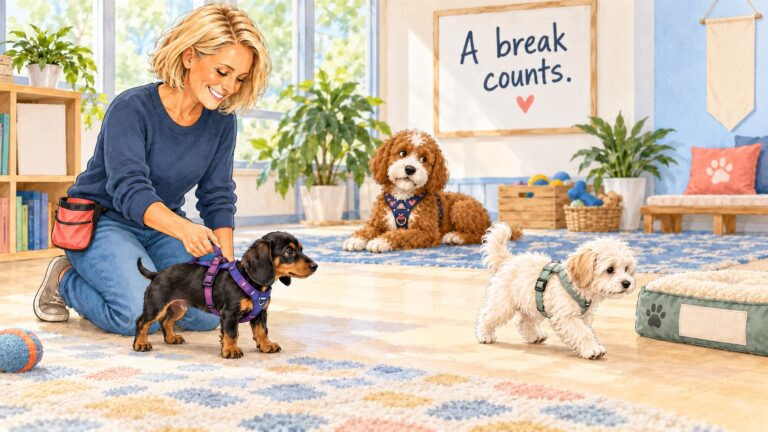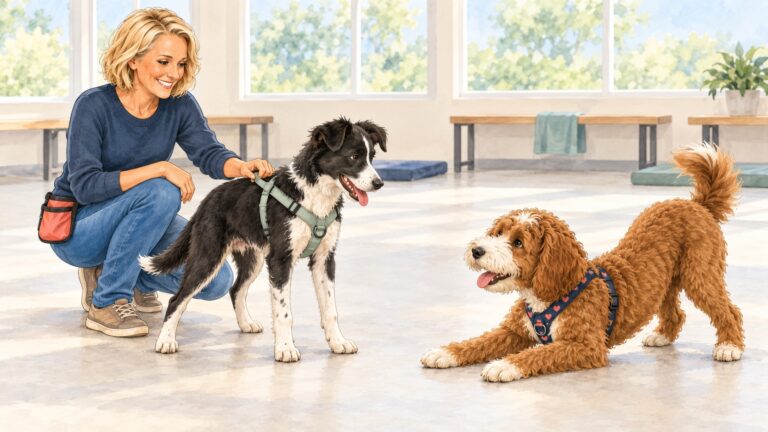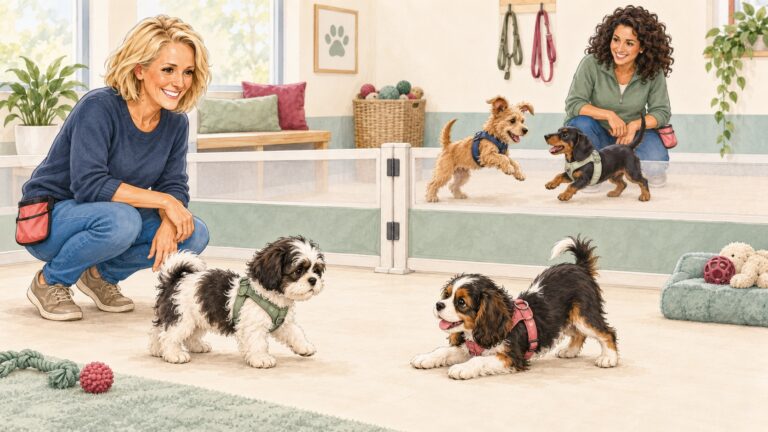
Your puppy is playing with a friend. There is a happy little bounce, a turn, a pause, and another invitation. Then you get ready to work together. He comes back to you, practices a skill, and heads off for another round.
Play. Connect. Practice. Play again.
That rhythm runs through every Go Anywhere Dog® class, from Puppy & Me through Life Skills 301. We are teaching social skills, practical skills, and how to move between being wonderfully excited and being available to do something with your person.
His friends remain fun. You become part of the fun, too.
A classroom with room for the whole dog
A puppy arrives with a body, a developmental stage, a history, and feelings about the room. So does the person holding the treats. We teach both of you.
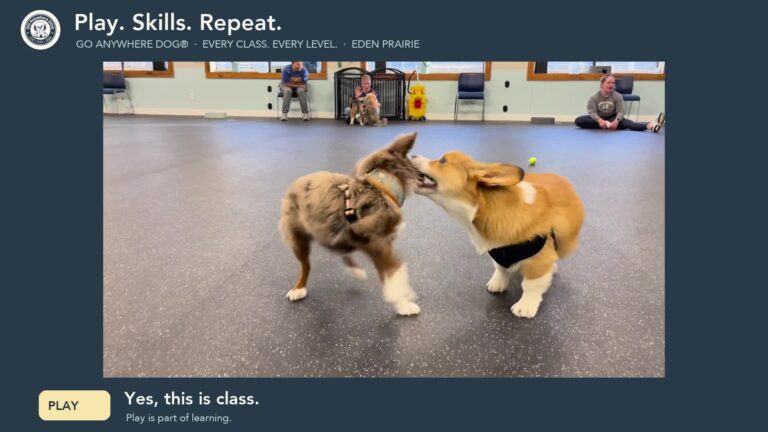
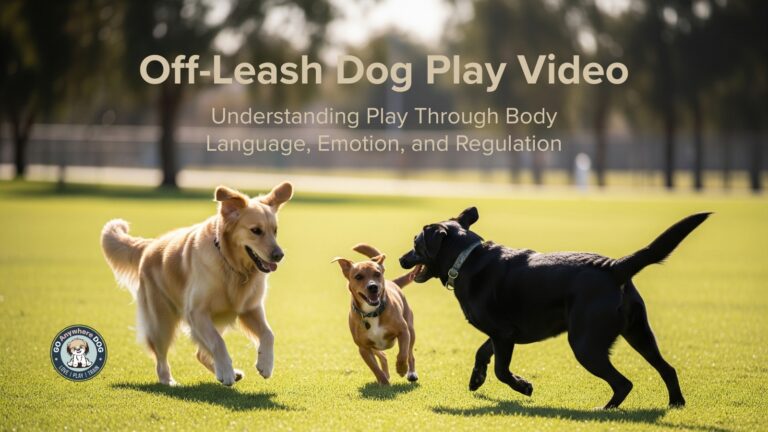
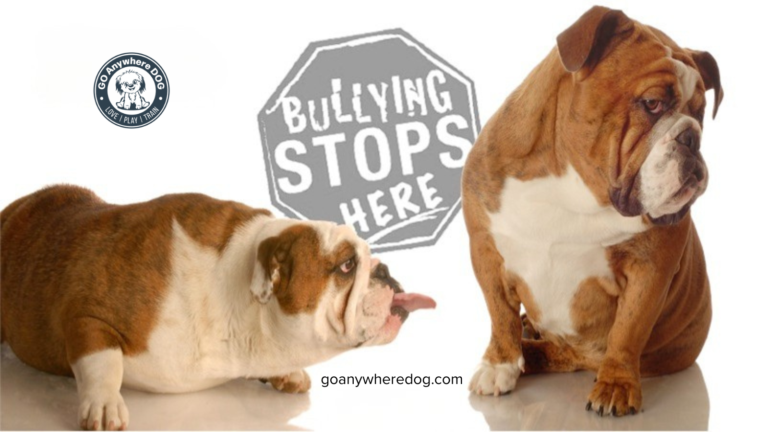
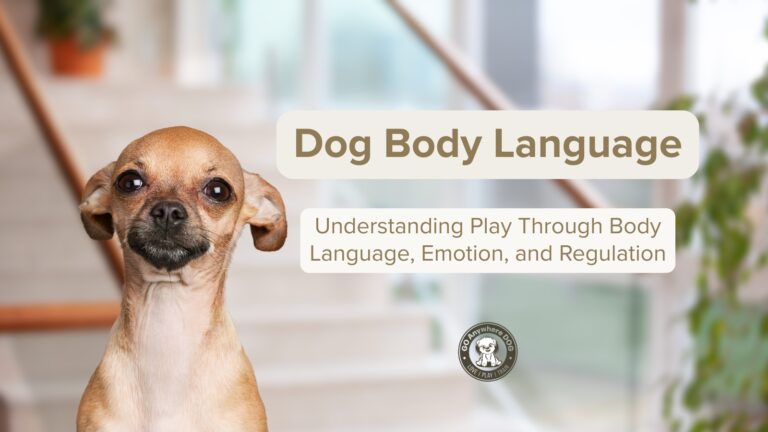
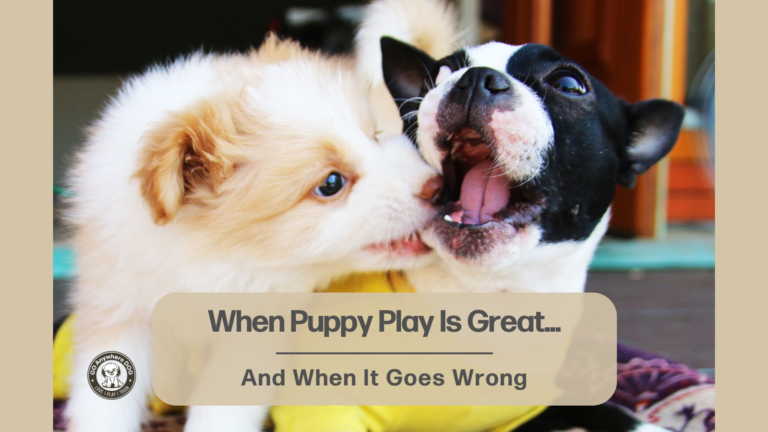
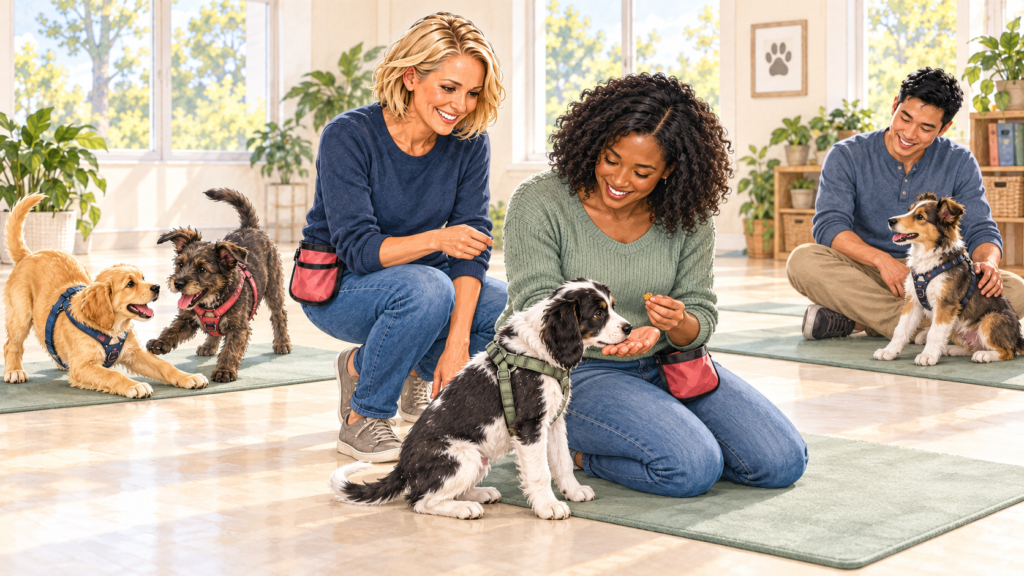
In play, dogs are communicating with each other. They invite, respond, change direction, take breaks, and sometimes need help. Our Dog Life Coaches read what is happening and help families see it. Is everybody participating willingly? Does someone need more space? Is that enthusiastic greeting becoming a bit much?
Your dog’s classmate has opinions. Learning to notice them belongs in the curriculum.
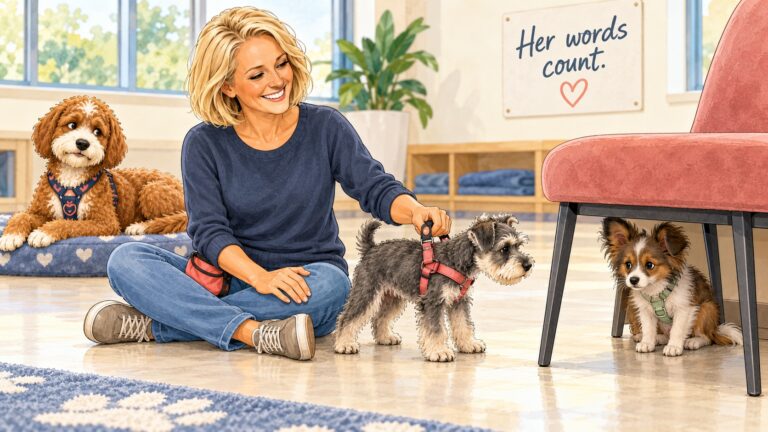
We also help you see your own dog clearly. The puppy who hangs back may need time and support. The one who charges into everything may need help finding a workable pace. Size and play style matter, which is why we offer separate small-dog groups and guide the play in front of us.
That coaching continues as dogs grow. Play remains part of class through Life Skills 201 and 301, alongside increasingly challenging skill work.
The transitions are teaching moments
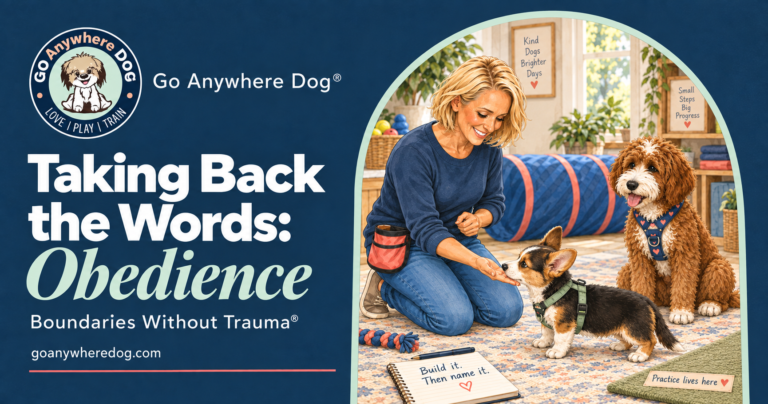
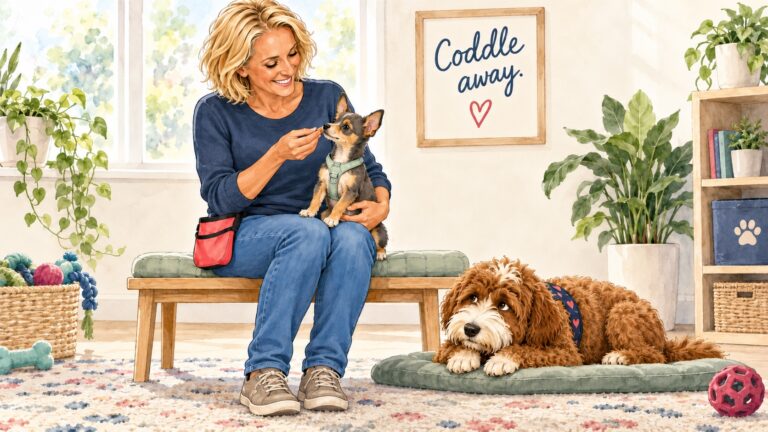
Coming out of play asks something of a young dog. His body is moving, his friends are interesting, and the world has just become very exciting. We help him reconnect with his person and find his way into a manageable task.
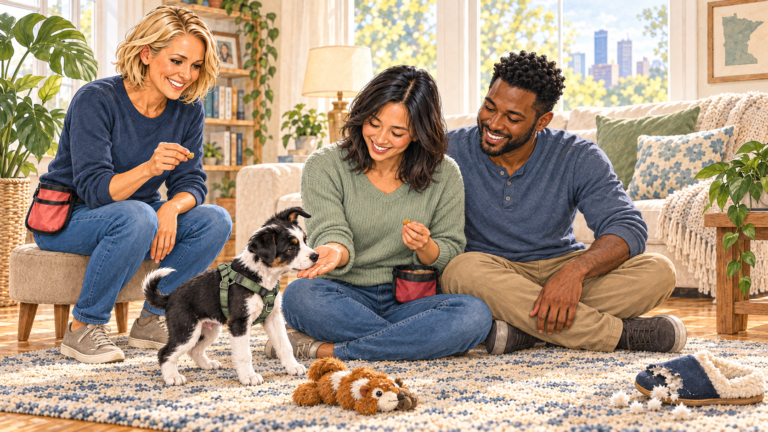
Snacks out. Connect. Notice the dog in front of you. Help him come down enough to work together.
That is a practice opportunity in its own right. Over time, families get many chances to help their dog move between social activity, focused work, and settling. The support changes with the dog and the moment.
We want dogs who can enjoy themselves and find a way back. Excitement belongs here. Calm belongs here, too. A useful range of responses is the goal.
After skill work, there is more play. The return matters: reconnecting with a person can lead to something the dog enjoys. Families practice that connection in a room where there are actual dog friends to compete with the contents of the treat pouch.
The treat pouch is doing its best. We give it a plan.
Why play belongs in a serious learning program
Our class design draws on research about learning and development across children and other mammals, alongside the practical work of teaching dogs and their people. There are several relevant questions: What happens when exploration is supported? What does social experience contribute during development? How does the relationship with a caregiver affect engagement?
In Fisher and colleagues’ preschool study, guided play helped children learn geometric shapes better than free play or direct instruction. The advantage was also present at the follow-up a week later. Adults supplied purposeful support while children participated actively in the learning.
A 2022 systematic review and meta-analysis by Skene and colleagues examined guided play across children’s learning tasks. It found advantages over direct instruction for early mathematics, shape knowledge, and switching between tasks, and over free play for spatial vocabulary. Other measured outcomes did not show a difference. The findings support looking carefully at the learning goal and the kind of guidance being offered.
Social play also has a place in the study of mammalian development. Bell, Pellis and Kolb’s research in juvenile rats found that play experience affected the structure of neurons in the medial prefrontal cortex. Their results distinguished the effects of having peers present from the effects of actually playing with them.
And the relationship with the human matters in dogs. In Horn, Huber and Range’s problem-solving study, dogs spent longer working with a food-containing apparatus when their own person was present. An unfamiliar person did not provide the same effect. The researchers described an owner-specific secure-base effect.
These are different species and different tasks. They give us evidence about guided exploration, social experience, and caregiver relationships. We use those findings to inform teaching choices, then pay attention to what is happening with the dogs and people in our classroom.
The practical application is woven into class: room to play, purposeful coaching, achievable skill practice, and support from a person who is learning to read and respond to their dog.
Emotional safety and skill development grow together
This is the architecture of Boundaries Without Trauma®. Emotional safety is the foundation. Emotional regulation and skill development are the two ongoing pillars.
A dog learns what to do while his person learns how to help him do it. We build behaviors, make the cues meaningful, and develop reliability through appropriate distractions, distance, and duration. We also help families notice when the task or the situation needs to change.
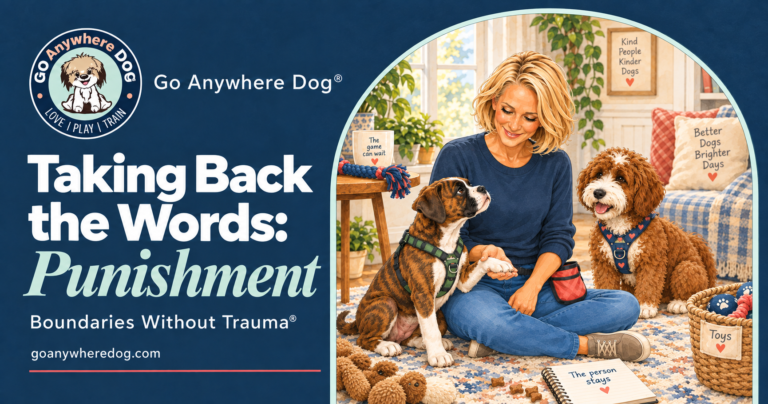
If a puppy is frightened or overwhelmed, that information changes the plan. His person helps him find relief and a more manageable starting point. Our teaching uses rewards and humane boundaries, with no pain, fear, or intimidation.
For a missed cue, deliberate loss of desirable access comes after relevant fluency. Reinforcement and everyday consequences are already operating. Distress calls for support. Confusion calls for teaching. Protection and appropriate social boundaries start immediately. Reading the dog, the person and the rest of the room is part of the work.
There is no requirement to arrive knowing all of this. Learning to notice it is why families come to class.
A graduation moment has a beginning
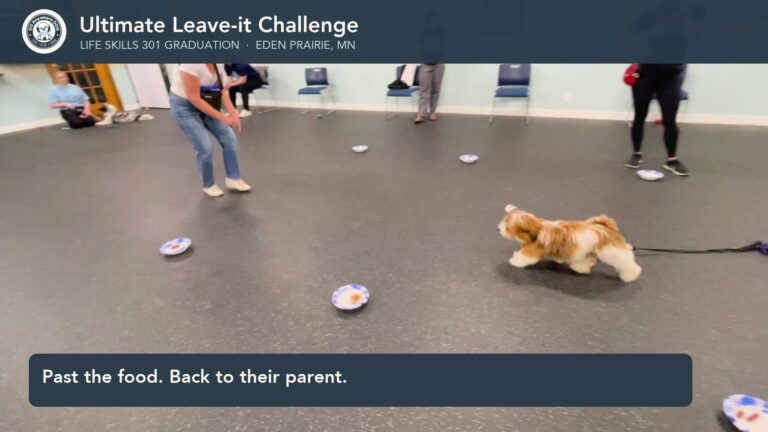
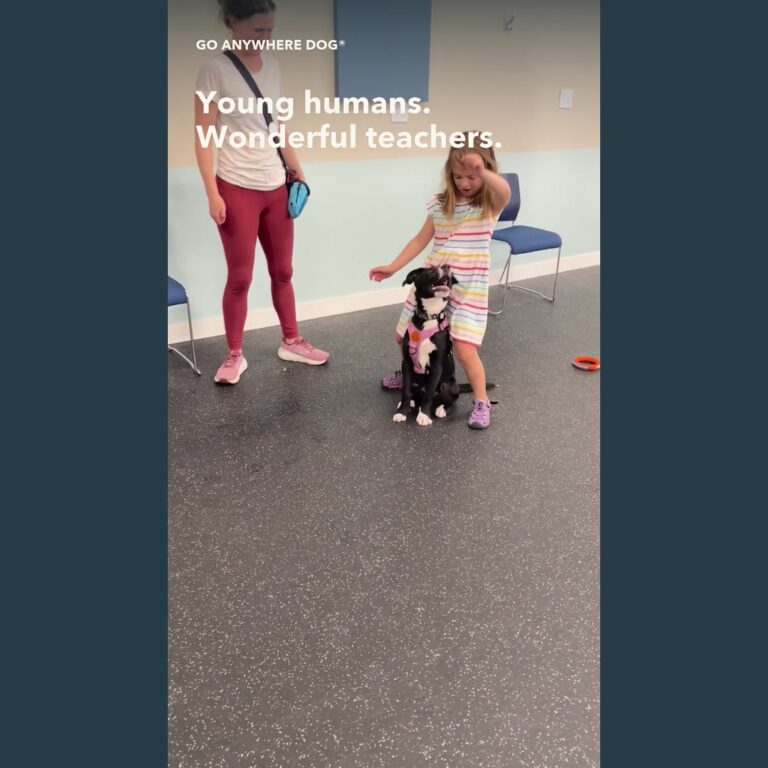
In our 29-second play-and-skills video, Life Skills graduation families alternate play with By My Side, a short skill sequence, Magic Mat stays, and recalls past food distractions.
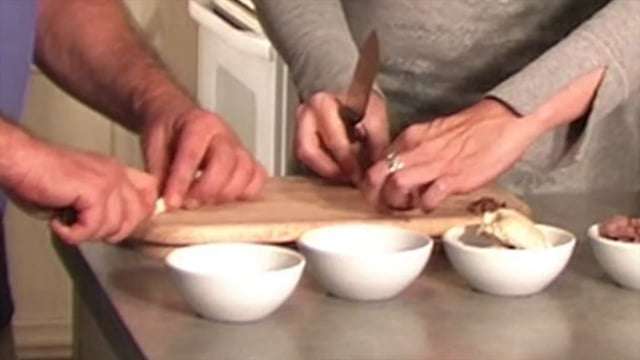
The Ultimate Leave-it Challenge makes those distractions especially clear. The bowls contain hot dogs and little hamburgers. Dogs pass them on the way back to their parent.
Yes. Actual hamburgers. The room is taking its job seriously.
That is a graduation exercise built through practice. A new puppy begins with smaller, more achievable steps. The footage shows moments from graduation classes, rather than every level or a chronological recording of one class.
The journey begins in Puppy & Me for puppies under 16 weeks, or Life Skills 101 for eligible older puppies. It continues through 201 and 301, with Outings taking practice into everyday places. Families learn to support their dog as the questions become more interesting.
Bring the learning into your life
A classroom gives families a coached place to practice. Home adds the front door, the kitchen, the evening routine, and the sidewalk your puppy will walk tomorrow.
Our in-home puppy training provides individual help where family life happens. Ultimate Puppy Training Packages combine professional private sessions with the class journey. Your puppy continues living at home, and family participation helps connect the coach’s work to daily life.
All group classes meet at 14500 Martin Drive, Suite 1500, Eden Prairie, Minnesota. Private puppy training and dog behavior help serve Minneapolis and our western and southwestern Twin Cities service area.
Tell Jeannie about your dog: age, ZIP code, and what you would love help with. She can help you find your starting point and check availability.
There is room for the dog you have, the person you are, and the life you are learning to share.
— Jody & your Dog Life Coaches