In This Video
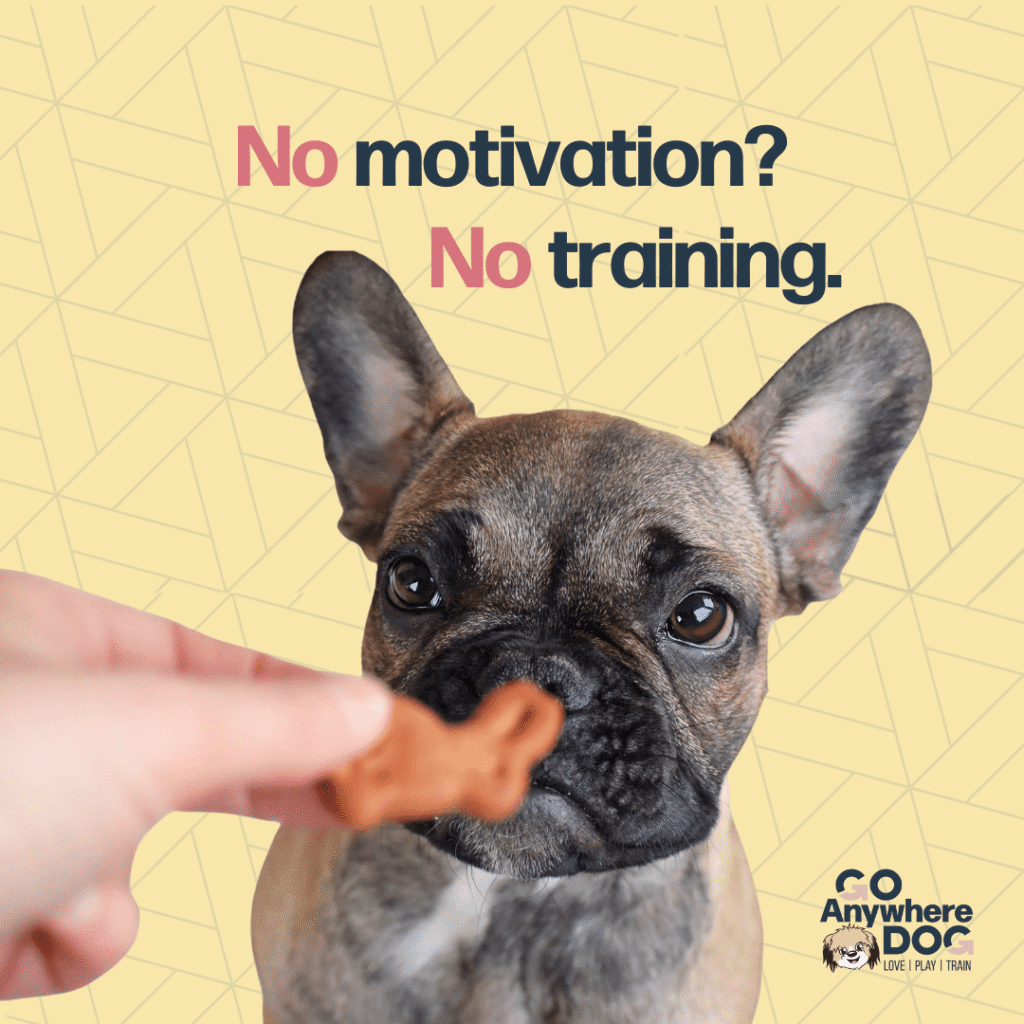
Motivation is your dog's answer to the question “why should I?” In this video you'll see why there is no training without it, why fear and frustration are poor motivators, and how reward-based training makes you the source of all the good stuff in your dog's world. Food, play, toys, praise and attention all count; your job is to find what your dog values most and pay the right price for the behavior you want.
Key Moments
- 0:01 — No motivation, no training
- 0:21 — Your dog's question: “Why should I?”
- 0:49 — Two ways to answer why, and why fear loses
- 1:03 — Reward-based training: be the source of the good stuff
- 1:34 — Dogs learn what brings the reward, just like us
- 2:05 — Food, play, toys, praise and attention
- 2:36 — Every species has its price: dogs do what works for dogs
Full Transcript
Okay folks, let's talk motivation. Before we begin training we must understand this: if there is no motivation, there is no training. Motivation is your dog's answer to “why?” And behavior change? If you want to change your dog's behavior, then you've got to give them a good reason.
When you give your dog a request, imagine him asking, “Why should I?” Let's just imagine your dog's chasing a squirrel. Really fun stuff if you're a dog. You call him to come back to you. Now your dog's got a big decision to make: do I keep chasing that squirrel, or do I go back to my owner? When you make that call, your dog is thinking, “Why should I? What's in it for me?”
Now, that why question can be answered in a couple of ways. We can teach him that if he doesn't come back, something bad happens. Or, even less effectively, we can teach him that if he eventually comes back after we've been yelling through what seems like forever, something bad happens: we get mad. Which isn't motivation to come to you in anyone's book.
Or we can teach him that if he comes running back the moment he hears that call, something wonderful happens, leaving that squirrel back in the dust. That's what reward-based training is all about. We give him the best reason in the world to do what we asked, because it produces the best results for him. You aren't the source of fear; you're the source of all the good stuff in the world. That's how training based on the giving or withholding of the good stuff works, as your dog sees it.
And in that sense they're not so different from us. It's just learning what brings the reward. If you had a job in a factory painting cars, and you were told if you paint the cars blue you get paid, if you paint them red you don't, what are you going to do?
Which brings us back to the big motivator for your dog. If you think about it, you probably already know what dogs think are great: it's food, play, toys, praise and attention. All the things that get that tail wagging. Some are super awesome to your dog, showing it with big, energetic wagging. Some are just so-so, more like a half tail wag. Working out what your dog puts in his top list of faves can be one of the greatest joys of having a dog.
Most dogs love food. What's just everyday, and what's a gourmet treat? We've put together a food tips video of what treats are real winners for most dogs and how to prepare them. Because when we're thinking about changing behavior, what it comes down to is this: every species, dogs and humans alike, has its price. If we want to change behavior, you have to pay the right price.
So here's what we've got: dogs do what works for dogs. Let me repeat this: dogs do what works for dogs. You'll hear me say it often, because it's just that important, and just that simple. But best of all, it really pays off.