If you are looking at puppy boot camp or board-and-train, I understand the appeal. You love your puppy. You also have a job, a family, interrupted sleep, and a small set of teeth attached to your pants.
Someone experienced taking on more of the work sounds like relief. Wanting that help makes sense.
But before you compare the number of commands, the length of the stay, or the graduation video, there is something I want you to ask about.
Your puppy’s development.
A puppy can learn a skill quickly. Growing up takes time. A training package cannot turn a baby into a mature dog by its completion date.
And the methods used during those weeks matter long after the invoice is paid.
Your puppy is growing while the training is happening
Your puppy arrives with a developing brain and body. She is learning how to live with people, what feels safe, how to play, and what happens when something worries her. Those lessons happen alongside sit, down, and come.
We can give her good practice. We can make her day more predictable. We can teach useful skills and help her recover from a difficult moment. We cannot order her development to move faster because a program lasts two weeks.
The American Veterinary Society of Animal Behavior identifies the first three months as especially important for socialization. It recommends safe introductions that avoid overwhelming fear, withdrawal, or avoidance. Those early experiences deserve thoughtful planning. Filling a puppy’s calendar is not the same as helping her feel comfortable in the world. AVSAB puppy socialization statement
Development continues after that early window. A study of potential guide dogs found a temporary change in responsiveness to their familiar caregiver during adolescence. Progress does not mean a puppy will perform like the same dog in every setting, at every age, from that day forward. Asher and colleagues, 2020
That is why I want a program to explain how it supports the puppy who is growing, as well as the skills it plans to teach.
A quieter puppy can still be a worried puppy
Here is where I am unequivocal: I will not use pain, fear, or intimidation to train a puppy.
Shock collars, prong collars, leash corrections, and other aversive methods can carry serious costs. Fear, avoidance, defensive behavior, and a damaged relationship with the people involved are not acceptable trade-offs for a tidy demonstration of obedience. AVSAB recommends reward-based methods and opposes aversive training; it reaffirmed that position in 2025. AVSAB’s current position
The fallout can extend beyond the training session. In a study of working German shepherds, dogs with a recent history of shock-collar training showed more stress-related behavior during sessions in which no shocks were delivered. The researchers concluded that the dogs had also formed negative associations with aspects of the training situation. Schilder and van der Borg, 2004
A separate study of 92 companion dogs found more stress-related behavior in dogs attending schools that used aversive methods. Dogs in the group using a high proportion of those methods also showed larger post-training cortisol increases and a more pessimistic response in a test outside the training setting. Vieira de Castro and colleagues, 2020
These are welfare concerns. A dog’s ability to complete a command does not make them disappear.
Imagine a puppy who is corrected when another dog approaches. The trainer may intend to teach her to stay in position. The puppy may also learn that approaching dogs predict something unpleasant. If she stays still, the demonstration can look successful while that other lesson goes unnoticed.
This is why a graduation video cannot tell a family everything they need to know. A puppy who stops moving, stops protesting, or stops trying to leave may still be distressed. A family may recognize avoidance or defensive behavior later, when the dog is back in everyday life.
Later fear deserves a careful history and assessment, including the training methods used. Calling it stubbornness and applying more pressure can compound the problem.
My standard is bigger than getting a behavior to stop. I want to know what the puppy is learning about the world and the people in it.
How we put the science to work at Go Anywhere Dog®
The research matters because it changes what we do in the room. Here is what that looks like.
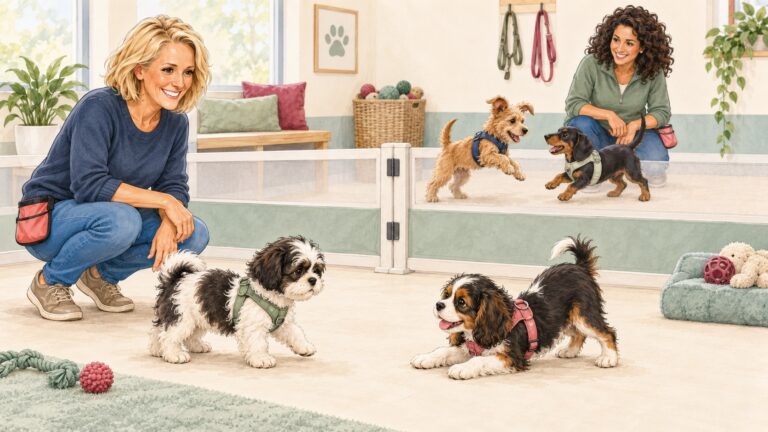
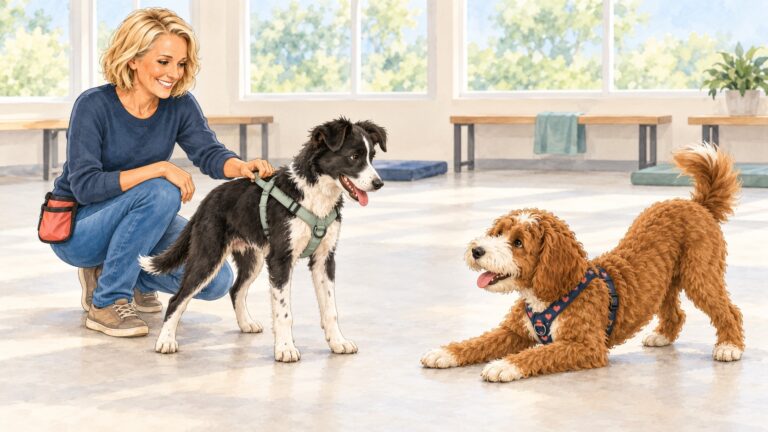
We make the next step manageable. If another puppy is too much, we change the distance or the pairing. If the room is overwhelming, we give the puppy a quieter way to participate. We watch whether she can explore, recover, and choose to engage. That is how we apply the socialization guidance: the quality of the experience matters.
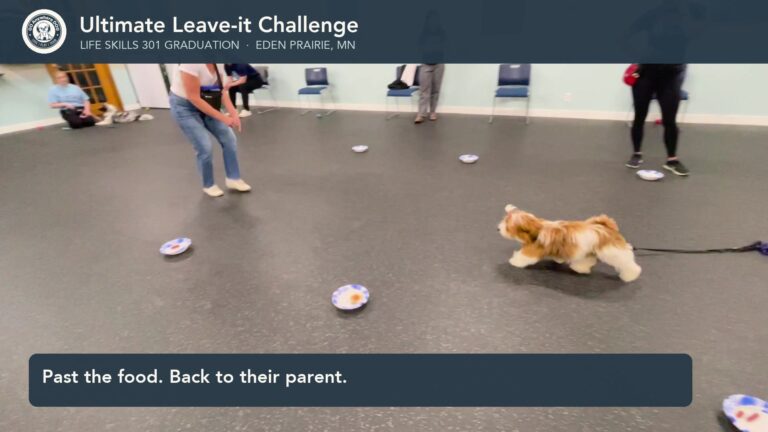
We make good choices worth repeating. We arrange opportunities to succeed and reward the skills we want to grow. A puppy can practice coming back to her person, settling, or leaving something alone through small, successful steps. In a controlled comparison involving 63 dogs, reward-focused training achieved better results on several measures of response to cues than the electronic-collar group. Rewards are a practical way to teach. China and colleagues, 2020
We take the puppy’s relationship with her person seriously. In a study of adult dogs facing a threatening stranger, the rise in heart rate was smaller when their owner was present. That is evidence that a familiar person can help buffer a dog’s stress. At GAD, we welcome comfort the puppy finds comforting, help families recognize requests for space, and include the family in learning. We want coming to you for help to remain a good option. Gácsi and colleagues, 2013
We keep reading the dog as she grows. We build from home practice to class skills and real-life outings, adjusting the difficulty and support. A hard day is information for the plan. The class journey continues through every level because living comfortably with people and other dogs deserves ongoing practice.
That is the work I want families to be able to see: what the puppy is doing, how she is feeling, and how our response helps her move forward.
Seven questions to ask before puppy boot camp or board-and-train
Program names do not answer these questions. A boot camp may be a daytime program. Board-and-train may happen in a trainer’s home or a larger facility. Ask for the actual plan for your puppy.
1. What will you expect of my puppy at this age?
Ask which goals are realistic now, how the trainer will adjust when your puppy struggles, and what the plan looks like through adolescence.
Listen for an explanation of your puppy’s needs, not simply a list of commands promised by a deadline. What happens if she is tired? Frightened? Having trouble with the environment? Does the plan change, or does the pressure increase?
At Go Anywhere Dog®, we build the next manageable step. We want progress that gives the puppy and the family something useful to build on. We do not promise a finished dog by a fixed date.
2. Exactly which training methods and equipment will you use?
Ask directly about shock or electronic collars, prong collars, choke chains, leash corrections, startling, and physical intimidation. Ask what happens when the puppy does not perform the requested behavior. Get the answer in writing before enrolling.
A soft word such as “communication” does not explain how a tool changes behavior. Ask the trainer to describe what the puppy experiences, what makes the sensation stop, and whether avoiding that sensation is part of the lesson. Using treats during some exercises does not answer what happens during the others.
Our answer is clear: we teach through rewards, thoughtful practice, and changes to the environment. We use gates, management, routines, and instruction to make boundaries understandable. That is what we mean by Boundaries Without Trauma®.
3. What will you do when my puppy hides, freezes, growls, or tries to leave?
This answer tells you a great deal about the program.
Ask for a specific example. Will the trainer give the puppy space, make the situation easier, and reassess? Or will the puppy be required to remain in the situation until she stops objecting?
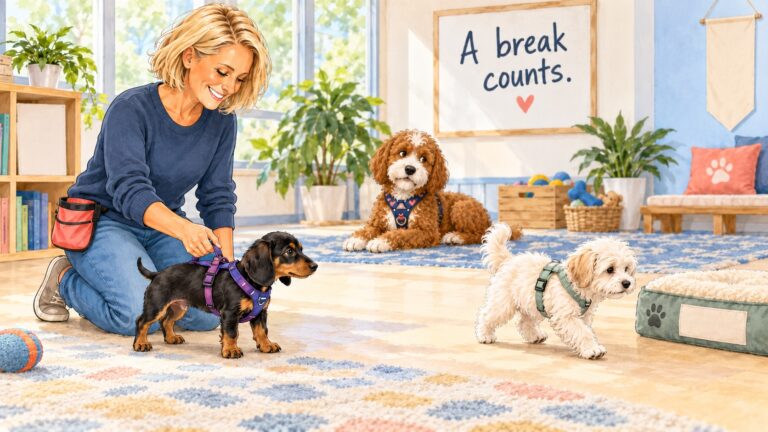
At GAD, that behavior gives us information. We look at the puppy’s body, the situation, and what would help her feel safer. Sometimes the right next step is more distance. Sometimes it is comfort, a break, or ending that activity.
We take a growl or air snap seriously as communication. We also welcome comforting a scared puppy. The puppy does not have to hide her distress to earn help.
4. Where will my puppy rest, and who responds when she needs help?
Ask to see the actual sleeping and resting area. Ask about barking nearby, overnight supervision, bathroom breaks, time alone, and what staff do if the puppy cannot settle.
A crate can be a comfortable resting place. What matters is how that individual puppy experiences it and how the people respond. “Crated between sessions” leaves a lot unanswered.
I would want to know whether a puppy can get restorative rest and whether someone notices when the arrangement is not working. A beautiful training room tells you little about the other hours of the day.
With Ultimate Puppy Training Packages, your puppy continues living with you. We provide scheduled private training and outings, group classes, and family guidance. The package does not include overnight boarding or all-day care.
5. How will you help my puppy feel safe around other dogs?
Ask how play partners are chosen. Ask how staff recognize a puppy who is overwhelmed and how they check that both puppies want to continue.
“She will be around lots of dogs” is only a description of exposure. I want to hear how the experience will be adjusted for her size, play style, confidence, and response in the moment.
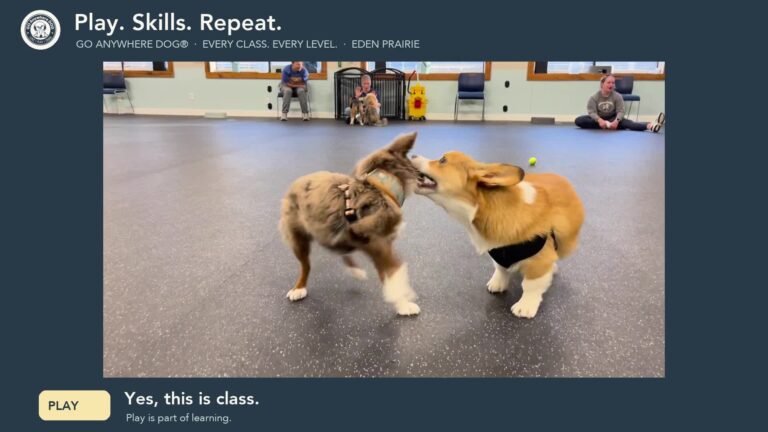
At GAD, we pause interactions and use a consent test. The puppy’s choice about returning to play helps guide us. We also provide small-breed puppy groups and adjustments within the room.
The number of dogs in the room is not our measure of a good experience. We watch the puppies.
6. How will this work at home, with me?
Dogs do not automatically carry a trained skill into every new setting. Changing the person, the room, the distractions, or the way a cue is given can change their response. Research on obedience instruction has directly examined this problem of transferring learning to an unfamiliar environment. Braem and Mills, 2010
The puppy who performs beautifully for the trainer may need more teaching to do the same thing with you in your kitchen, with a child moving nearby and dinner on the counter.
That is generalization: learning that the skill still applies when the picture changes. It has to be part of the plan.
If the response to a struggle at home is simply “You aren’t following through,” the family is being handed blame where they need instruction. A trainer’s demonstration is not proof that the puppy has learned to do the same thing in your life. The professional’s job includes helping that learning transfer.
At GAD, we build practice into home life, classes, and thoughtfully paced outings. Your Dog Life Coach coaches you, too. When something falls apart, we look at what changed: the cue, the setting, the distraction, the difficulty, or the puppy’s emotional state. Then we make the next repetition manageable and teach from there.
Families do have a role. They need a clear, realistic practice plan, opportunities to try it with help, and support when it needs adjusting. Ask when you will practice with your puppy and what help is included after a difficult day at home.
Blaming the parent teaches neither end of the leash.
7. What am I buying, and what happens if my puppy needs a different pace?
Ask how much individual training is included, what happens between sessions, what costs extra, and which dates are actually available. Ask how the provider handles a puppy who is not coping with the setting or schedule.
Read the completion promise carefully. Does success mean a collection of demonstrated behaviors? Does it include the puppy’s emotional wellbeing? What support is available afterward?
At GAD, we explain the private sessions, classes, family participation, service area, and scheduling before you choose. We want the plan to fit the puppy and the people who will be living it.
If you have already enrolled your puppy
You chose help because you wanted things to go well. You were entitled to clear information about what that help would involve.
Ask these questions now. Ask to observe the methods and to see your puppy’s whole day, including rest and handling. Tell the provider plainly which methods you do not consent to using on your dog.
If your puppy is showing new fear, avoidance, growling, or distress, take it seriously. Pause the aversive methods and seek help from your veterinarian and a qualified professional who uses reward-based methods. A veterinary assessment can also identify pain or other health concerns affecting behavior. AVSAB humane training guidance
You do not need to blame yourself to change direction. Your puppy is still learning. The next experiences matter, too.
You can have more help while your puppy grows up
Wanting a professional to take on more of the training is reasonable. That is one reason we offer Ultimate Puppy Training Packages.
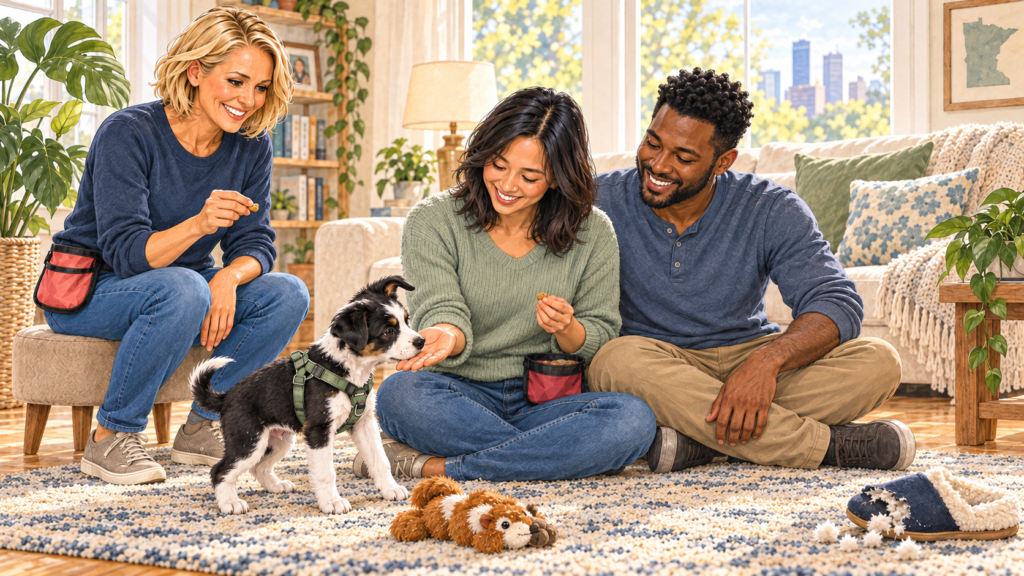
Your Dog Life Coach works directly with your puppy at home and on thoughtfully paced outings. Off-leash classes and practical guidance bring your family into the learning. Your puppy continues living with you.
If you are looking for puppy training in Minneapolis or nearby suburbs, compare our alternative to puppy boot camp and board-and-train, including how the program works and where we provide private sessions. Our group classes meet in Eden Prairie.
We can help with the work. We can teach useful skills. We can support the puppy and the family through the growing.
Growing up still takes the time it takes. Our responsibility is to make that time count in the puppy’s favor.