Does your dog bully other dogs?

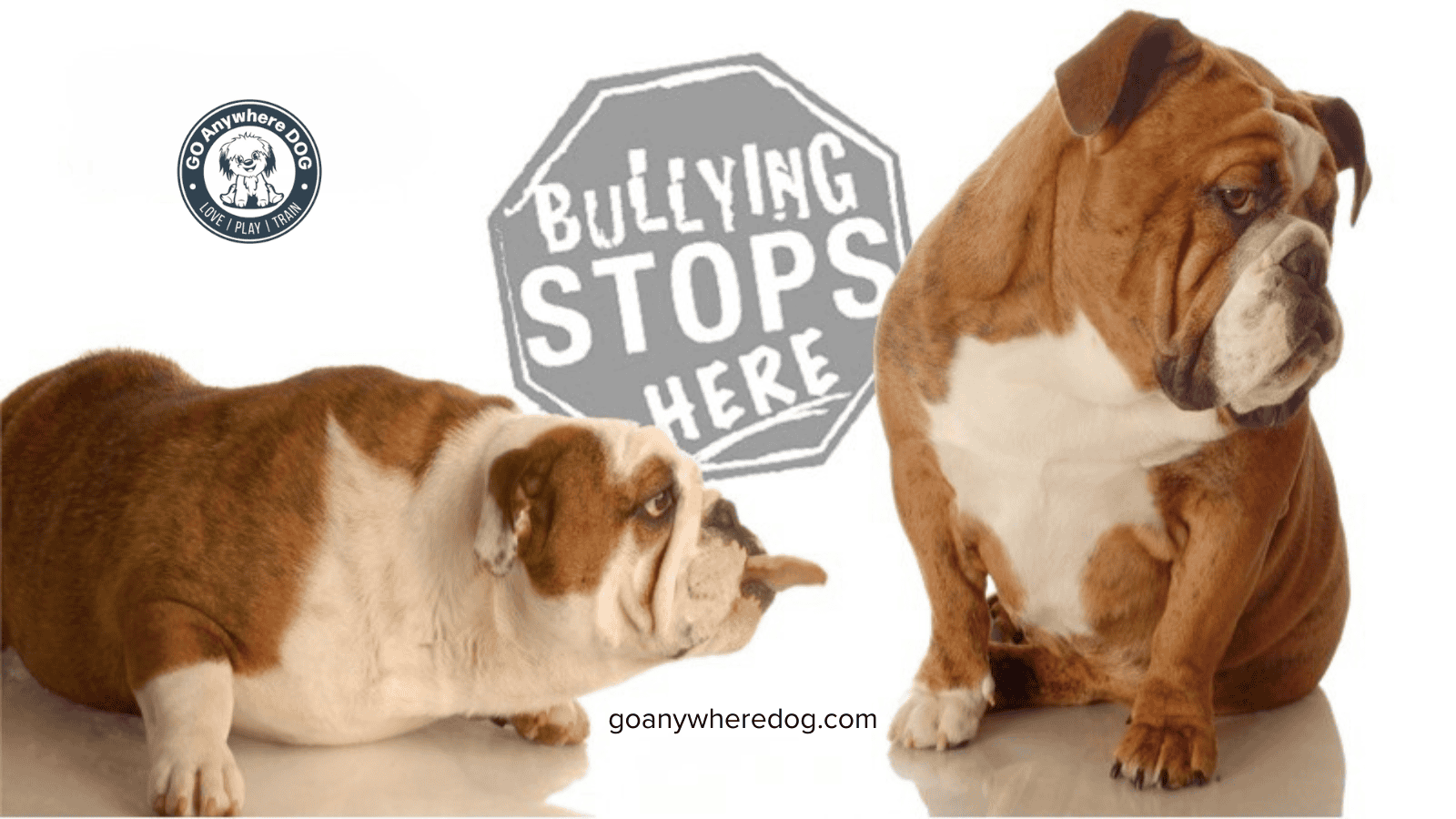
Bulldog sticking tongue out at other dog - does you dog bully other dogs?

Does Your Dog Bully Other Dogs?

We’ve spent years finally talking openly about bullying in schools—how damaging it can be, how deeply it affects confidence, safety, and emotional wellbeing.

But dogs don’t get a free pass from the same dynamics.

Yes—dogs can be bullied.
And yes—it can have lasting emotional effects.

How deeply it affects a dog depends on several factors.

When Dogs Are on the Receiving End

Not every negative interaction leaves a mark. What matters is context, history, and repetition.

Here are the biggest factors that influence how a dog processes a bullying experience:

1. Your Dog’s Overall Play History

Dogs with a rich history of positive play experiences tend to bounce back more easily. One bad interaction is less likely to stick if it’s outweighed by many good ones.

2. Exposure to Different “Types” of Dogs

Dogs discriminate extremely well.

A small dog who’s had lots of positive experiences with other small dogs—but few with large dogs—may develop a lasting fear if an early interaction with a big dog goes badly. The same can happen with dogs of certain breeds, coat colors, or play styles.

3. The Ratio of Good to Bad Experiences

Just like humans, when negative experiences outweigh positive ones, dogs start to feel less safe. They become guarded, reactive, or avoidant in similar situations moving forward.

If you believe your dog is being bullied, be your dog’s hero. Remove them from the situation immediately—and make sure their next interaction is a good one. That contrast matters.

Why This Matters More Than Ever

Dog parks and dog daycares have exploded in popularity. That means:

  • More dogs

  • More mixed play styles

  • More opportunities for things to go sideways

Not every dog is socially skilled. And not every environment is appropriate for every dog.

Is Your Dog the Bully?

This is the harder question—but an important one.

Bullying isn’t about being “bad.” It’s about skills, arousal, and awareness.

Here’s what to look for:

1. Greetings: How Does Your Dog Approach Others?

Most dogs prefer cautious, curved approaches. They sniff, circle, gather information.

Dogs who rush in fast, head-on, or skip these steps often get snapped at—not because the other dog is aggressive, but because the greeting was uncomfortable.

2. Play Initiation: Does Your Dog Ask—or Demand?

Healthy play starts with invitations:

  • Play bows

  • Loose bodies

  • Bouncy movements

Some dogs skip the invitation and jump straight into body-slamming, chasing, or biting. Imagine a stranger sprinting up to you and grabbing your arm. Not great.

3. Pauses and Turn-Taking

Good play has breaks.

Dogs pause, shake off, switch roles, and change games. These pauses say, “We’re still good, right?”

When a dog pins another too long, fixates on neck biting, or never releases pressure, play stops being play. Even confident dogs will eventually object.

Early on—especially with unfamiliar dogs—we want to see pauses and variety. As friendships develop, dogs often need fewer breaks. But early play should look flexible and mutual.

If Your Dog Is Struggling Socially

Here’s the good news: this is very fixable.

What doesn’t work is the old advice:

“They’ll work it out.”

They won’t.

The more a dog rehearses rough or bullying play, the harder it becomes to change. Dogs don’t “grow out of” poor social skills. They need to be taught.

Some common reasons dogs bully:

  • They enjoy rough play and miss social cues

  • They get stuck in one style of play

  • They’re over-aroused or under-exercised

  • They lack feedback that actually makes sense to them

A qualified behavior professional can help you identify why your dog is struggling and put a clear plan in place.

What You Can Do Right Now

  • Reinforce what’s going well: Praise calm, appropriate play

  • Interrupt early when things escalate

  • Follow through: “Too bad—no more play” means play actually stops

Sometimes that’s a short leash break. Sometimes it’s leaving the park for the day.

And that’s okay.

As Ian Dunbar famously reminds us, we don’t want to ignore warning signs or suppress communication—we want to guide dogs toward better emotional choices.

A Final Word (and a Reframe)

Dog parks and daycares can be wonderful enrichment tools—for the right dogs, with the right oversight.

If someone raises a concern about your dog’s behavior, it’s not an insult. It’s information.

Take it seriously. Take action.

Because the goal isn’t just fewer scuffles—it’s more joy.
For your dog.
For the dogs they interact with.
And for everyone sharing the space.

Until next time, Have Fun & Enjoy Your Dog!

Jody Karow – CTC

Dog Life Coach & Founder of Go Anywhere Dog®

P.S. Don’t forget to check out our online dog training program for living your best life with your dog!

P.P.S.  Don’t miss our local services in Minnetonka, Minneapolis & Edina, MN areas providing In Home Puppy & Dog Training and Minneapolis Puppy Classes for the social family dog.

 

Share:

Facebook
Twitter
Pinterest

Social Media

Be Your Puppy's Hero
Puppy school cartoon dogs branding graphic

The Go Anywhere Dog® Guide:
Be Your Puppy’s Hero

Hero Moments:
The Only Ones That
Matter Early On
 A hero moment is not when you teach a skill. It’s when you protect safety without need for proving anything.
jody-karow-founder-go-anywhere-dog-scaled.jpeg – Go Anywhere Dog®, Minneapolis & Twin Cities, MN, Dog Training

Jody Karow - CTC

Founder & Lead Dog Life Coach — Go Anywhere Dog®

Helping dogs — and their humans — master the social skills that make a Go Anywhere Dog®. Science-based. Play-driven. Boundaries without trauma®.

Jody Karow is the founder and lead trainer at Go Anywhere Dog® in Eden Prairie, serving families across the Minneapolis metro. With 20+ years of hands-on experience, Jody’s special sauce is social skills—the confidence, play etiquette, and emotional regulation that turn a good puppy into a Go Anywhere Dog®. Her method blends behavioral science with joyful practice: trust first, skills second, obedience that lasts.

Her work sits at the intersection of behavioral science, emotional intelligence, and real-world practice, helping families raise calm, joyful dogs who can truly go anywhere with them. Jody’s guiding principle is simple and unwavering: build trust before obedience. Because the best-behaved dogs aren’t managed—they’re connected.

When she’s not teaching puppies the art of polite play, Jody mentors fellow trainers, writes about dog-human relationships, and explores the trails around the Minneapolis metro with her own Go Anywhere Dogs by her side.

On the Blog
Man holding 8 week old puppy on a puppy socialization outing after learning from Go Anywhere Dog how to not get socialization wrong
Puppy Development

Puppy Socialization: What It Really Means (And What Most People Get Wrong)

Puppy socialization gets talked about like a checklist: meet 100 people, see 50 dogs, sniff every surface. But rapid exposure without context can create overwhelm, not confidence. In this video, we explore what socialization really means — how puppies learn about the world safely,

Read More »
A trainer explaining healthy off-leash dog play and body language during a video lesson.
Behavior & Emotion

Off-Leash Dog Play: What Healthy Play Looks Like

Understanding Play Through Body Language, Emotion, and Regulation Off-leash dog play can look chaotic if you don’t know what you’re seeing. Dogs communicate constantly through movement, posture, pauses, and play signals. When we understand the emotional state behind play, it becomes easier to tell

Read More »
10 Year Dog Training Give-away – Go Anywhere Dog®, Minneapolis & Twin Cities, MN, Dog Training
Speaking Dog

Go Anywhere Dog 10 Year Birthday Bash Giveaway

10th Birthday Bash Giveaway – FREE Dog Training Course for Rescues We’re turning ten and we’re ready to party!! When we opened our doors a decade ago, we started with classes full of rescue dogs. As a throwback to our humble beginnings and a thank

Read More »
Dog Friendly Stores Minneapolis – Go Anywhere Dog®, Minneapolis, MN, Dog Training
Life With Dogs

Twin Cities Dog-Friendly Stores

Where is my dog allowed in the Twin Cities? We love the Twin Cities! We rank in the top 10 most dog friendly cities year after year. It would appear our Minnesota Nice philosophy extends to dogs too. We encourage our students to get out

Read More »
Right vs Wrong blog post Wordpress header – Go Anywhere Dog®, Minneapolis & Twin Cities, MN, Puppy & Dog Training
Speaking Dog

Do dogs know right from wrong?

Short answer?Nope. And that’s actually great news. Dogs and humans do share a lot in common. We both learn from consequences (parking tickets are very motivating 😑), and we both form powerful associations through everyday experiences. A smell, a sound, a place—those things shape how

Read More »
Explore The Category of Your interest

Puppy Development

Early experiences shape confidence, coping, and resilience for life. This category explores how puppies learn long before formal training begins — and why early understanding matters more than early obedience.

Dog Body Language

Understanding how dogs communicate through posture, movement, facial expression, and subtle physical signals — so behavior makes sense in real time.

Behavior & Emotion

Behavior isn’t random. It’s driven by emotion, history, and context. These posts help you understand what dogs are feeling when behavior shifts, escalates, or seems confusing.

Fear & Stress

Fear isn’t defiance — it’s communication. This category focuses on recognizing fear early, understanding stress responses, and responding in ways that increase safety rather than escalation.

Training Foundations

Clear expectations, motivation, and learning principles that make training effective without force or intimidation. These pieces focus on why learning works — not just how.

Life With Dogs

Play, routines, enrichment, and real-world living. This category looks at how dogs fit into human lives with joy, structure, and realism.