In This Video
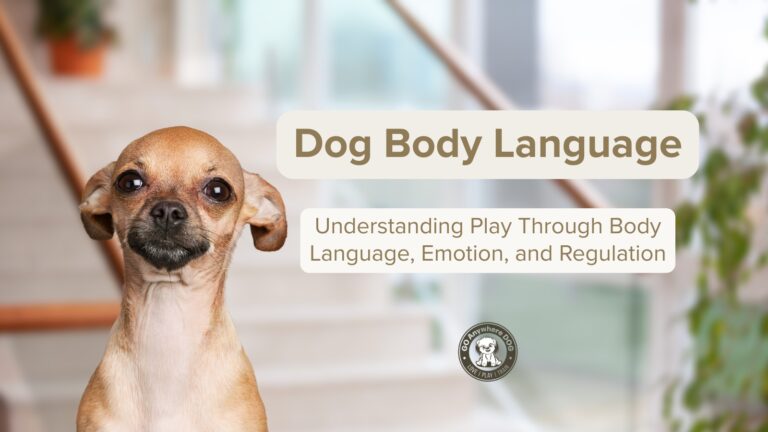
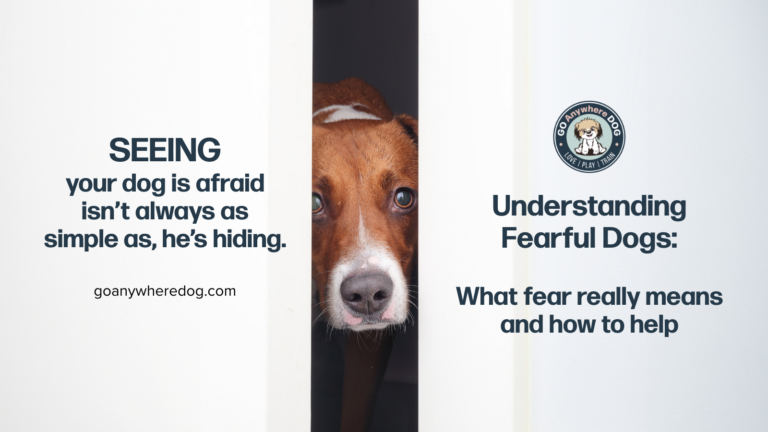
Aggression is communication: a dog may be angry or frustrated, but very often the dog is scared. Growling, snarling, snapping, and biting do not come from nowhere. They are attempts to make a person, animal, or situation back off. You’ll learn how playful barking, lunging, and growling can look like aggression, why motivation matters, and how genetics, arousal, stress, anxiety, pain, frustration, and fear can influence behavior. Warning signals are valuable because they can prevent a bite when we listen and create distance. Punishing those warnings does not change how the dog feels and can make the situation more dangerous. When aggression appears, reduce tension, move the dog away safely, and get qualified professional help before repeating the situation.
Key Moments
0:22 — Aggression communicates anger, frustration, or fear
2:04 — Growling and snapping never come from nowhere
2:47 — When behavior that looks aggressive is actually play
4:26 — Genetics, arousal, stress, anxiety, and fear
7:57 — Why warning signals can prevent a bite
14:55 — What to do—and not do—when aggression appears
Full Transcript
0:00 — [Music]
0:05 — Welcome back. Now that you have learned about your dog’s body language and how to determine when your dog is scared, what to watch for, and how to help your pup in overcoming those fears, it’s time to address the one thing that will scare us most: aggression. It’s your dog’s way of communicating, “I’m angry,” or “I’m frustrated,” or yes, more often, “I’m scared.”
0:34 — Nothing will rattle and scare you more than when the dog you love acts out aggressively. When you don’t know why your dog is behaving like this or what to do about it, you’re left with a serious sinking feeling of despair. Understandable. You love your dog. This is terrifying. You don’t want to make it worse, and you definitely want it to stop right now.
1:02 — We all get a little scared when we encounter things we do not understand or know how to handle. If your pup starts growling, snarling, snapping, or biting, I want you to understand where it comes from and what it may be about. At the end of this video, I’ll give you direction on what to do if your dog is growling, snarling, or snapping.
1:25 — Here’s what we’ll cover in this video: why your dog may be behaving aggressively; when what looks like aggression isn’t—it’s actually fun; what causes aggression in dogs; why growling, snarling, and snapping are actually a good thing; common triggers of aggression among dogs; and what you can do when your dog shows aggression.
1:57 — Let’s start off with why your dog is growling, snarling, or snapping in the first place. Quite simply, your dog is upset or frustrated. Dogs do not growl, snarl, or snap for no reason. Your dog is trying to communicate, “Get away from me,” or “Get away from my stuff.” I hear often when a dog acts aggressively, “It came out of nowhere.”
2:24 — A display of anger, frustration, or fear serves a purpose: an attempt by your dog to communicate to someone or something they are not okay. It’s not coming from nothing. Something is upsetting to your dog, and your dog is trying to communicate to that someone or something to back off.
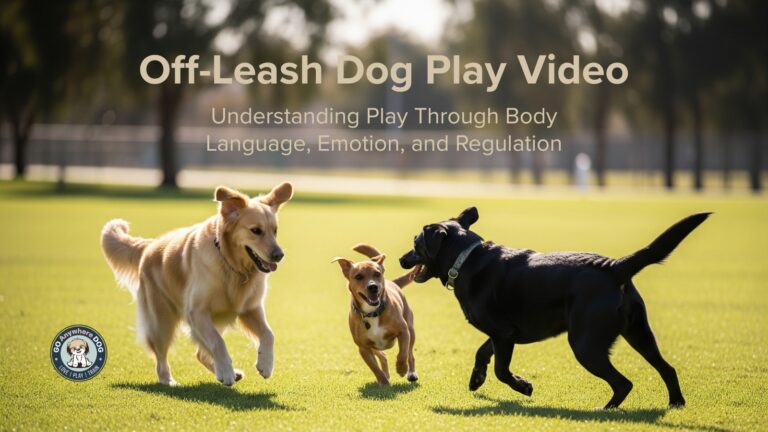
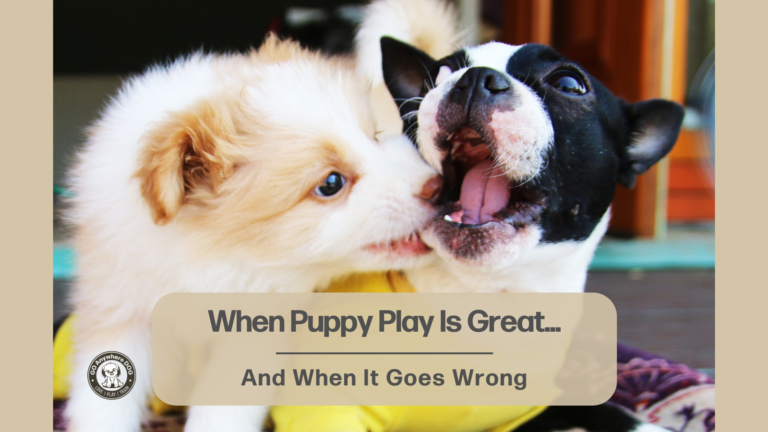
2:47 — When what looks like aggression isn’t, it’s actually fun. Many of the things we see when dogs are fighting, we also see in fun and play. Just like kids yell, scream, wrestle, and fight during play, so do dogs in their doggy way. Sometimes it is hard to differentiate, with both kids and dogs, whether they’re still having fun playing or they are truly upset.
3:12 — Revisiting the dog body language video when you are uncertain will help you continue to get better at knowing how your dog is feeling or coping in any situation. Some dogs find it fantastically fun to bark, lunge, and growl. They do this when they get super excited about stuff.
3:37 — An example is when your dog is on leash. Your dog could be barking, growling, and lunging, trying to get access to another dog to play. That leash is frustrating. It’s holding him back or stopping him from going to say hi. Sometimes these same behaviors displayed while on leash are warnings, with a desire for the other dog to please go away.
4:04 — If your dog is barking, growling, or lunging on leash, you’ll want to get some professional counsel. How we treat or change that behavior depends on the motivation behind the behavior. Is your dog overexcited, frustrated, or scared? The answers to these questions will help determine the best plan of action to resolve this problem.
4:26 — Let’s talk about what causes aggression in dogs. Everyone wants answers to the why question: Why is my dog aggressive? Why doesn’t my dog like other dogs? Why is my dog just flat-out mean? Not even the best professionals can always answer these questions for you. Your dog cannot tell us why, or what exactly it is about the mailman that makes her mad.
4:55 — Here’s some of what we do know about things that influence aggression in dogs. First up, it’s genetics. Some dogs have been specifically bred for their skills in guarding things. It’s a tough predicament for dogs to have someone want you to bark, snarl, and growl at some strangers and not others. Quite confusing for your dog.
5:18 — Some dogs, sadly, have been specifically bred for their aptitude or drive for fighting other dogs. Some dogs are bred for tasks that require what we call high drive. This high drive often contributes to high arousal. High arousal and excitement can easily tip into aggression.
5:42 — Think of sporting events people attend and the high levels of excitement and arousal that occur. More often at those events, you’ll witness fights because everyone’s so amped up. The people more likely to go to these higher levels of arousal are often more likely to end up in fights. The same is seen in dogs.
6:07 — Next we have stress, anxiety, and frustration. Think about yourself when you are having a bad day. You’re stressed, and the frustrations you encountered in this day have you completely on edge. Days like this, we often snap or even yell at someone when we normally wouldn’t have behaved that way.
6:27 — Some dogs are so stressed they too can have anger-management issues, and this can lead to more frequent aggressive displays. Daily suffering from high anxiety has a terrible impact on quality of life and makes it really hard to hold it together in lots of situations. If your dog suffers from high anxiety, get to your vet. Medication can help.
6:55 — The number-one reason we see in dogs for aggressive behavior is fear. Your dog is using aggression as a way to communicate, “Please get away from me. I’m scared.” When any animal is scared, fight or flight is triggered. Whether your dog chooses fight or flight depends on many factors: genetics, ability to flee, and stacking of just too much to handle in a short amount of time.
7:22 — Dogs do what works and learn quickly that growling, snarling, and snapping can make scary stuff go away. If your dog is acting out aggressively, go back to the fear video and make sure you can rule out fear as the cause first. When aggression is motivated by fear, the best strategy is not training a behavior. It’s all about changing the way your dog feels about the scary thing.
7:52 — Let’s talk about why growling, snarling, and snapping are actually a good thing. Growling, snarling, and snapping are warnings that communicate your dog is not okay. As long as we listen to those warnings and back off, it prevents the need for biting.
8:12 — The first dog-training conference I ever attended was by Dr. Ian Dunbar. He stated we should say thank you every time a dog growls at us. Up until that moment, all I’d ever heard from various pros was to punish growling, snarling, and snapping—not to ever let your dog get away with that.
8:30 — Dr. Dunbar went on to say punishing warning signals is like removing the ticker from the time bomb. This took me a bit to wrap my head around. Then I realized I’d been around thousands of dogs and had never been bitten, yet growled and snapped at many times. I always thought my backing away was a character flaw in me, that I obviously didn’t have the [unclear] to work with aggressive dogs.
9:00 — Come to find out, I was listening to my instincts despite what I was being told by other pros, and that was smart. Consider this: if a person is yelling, screaming, and threatening, what do you think is the best strategy for dealing with this? Go up to them and start yelling, screaming, and threatening too?
9:23 — I know there are some folks that indeed do this, but even most of them know in hindsight it was not the best approach. Why on earth are there professionals still out there saying this is what you must do with dogs? It’s absurd when you stop to really think about it. Human behavior modification has evolved over recent decades, and fortunately, so has dog behavior modification.
9:51 — Here’s what I want you to take away from this. When your dog is communicating through growls, snarls, or snaps, the goal is not to punish your pup for trying to give warning signals. The goal is to discover what is causing your dog the need to communicate, “Please back off.”
10:12 — You can punish those warning signals, but it still does not change that this particular situation is upsetting to your dog. The warning signals may be gone through punishment, but your dog is still upset, and oftentimes more than before because now he’s not allowed to express himself and how he is feeling.
10:32 — Barking, snarling, and snapping does not make a dog bad. It means your dog is trying desperately to communicate his discomfort so he can avoid engaging in a fight. Good dog.
10:52 — Common triggers of aggression among dogs: aggression does not come out of nowhere. It’s always situation-specific. First, we have the big one: fear. If I’m afraid, I’ve got a few choices: freeze, flee, or fight. Freezing often comes with warnings. If those warnings don’t work, your dog feels she has no choice but to fight or flee. If fleeing is not an option, fight is all she’s got.
11:21 — The moral here: don’t continually put your dog in situations that are terribly upsetting or scary for her. Help her overcome her fear first. Visit the fear video often if you identify any fears in your dog.
11:36 — Next we have resource guarding, which we most often see around food, toys, and objects—sometimes weird stuff like tin foil or tissue paper—resting places or locations, and loved ones. Resource guarding in dogs is where most people are certain a dog is trying to establish some sort of dominant role among others.
12:00 — Could it be your dog is just saying, “Mine. I really want to keep this to myself”? I’ll go as far as to say I’m really not sure how this is different from kids. My first jobs were in a child daycare and as a nanny. Kids fight over cookies. Kids fight over favorite toys.
12:22 — Kids also fight over who gets to sit in the beanbag chair, who gets the front seat of the car, or who gets to enter or hang out in their bedroom. Show me one kid that has not fought with siblings over Mom’s full, undivided attention.
12:39 — If this is really the same thing we are seeing among kids, why couldn’t we treat it just like we do with kids? In child daycare and as a nanny, I was taught to take away the item being fought over, redirect them to something else, help them feel better about taking turns, or teach them how we want them to behave differently.
13:02 — Get this: this is exactly how the best pros handle these things with dogs too. If anyone ever tells you differently, run. They don’t know what they’re talking about.
13:16 — Next we have body handling. This can include face, ears, neck—and when you’re thinking about the neck, think about grabbing that collar we need to do sometimes for safety. It can be anywhere around the body. This can be feet or tail area. Remember the need for handling those feet for nail trims.
13:38 — Body-handling issues can be fear-related. Your dog just really doesn’t like to be touched in certain ways, or it can come from a previous bad experience. Never force your dog to tolerate your touch if your dog has made it clear through aggressive displays. Please don’t.
13:58 — We approach body-handling issues through counseling our clients, through changing how their dog feels about a particular touch in small steps toward that final goal.
14:09 — Now we have when play tips into fighting. We covered arousal or excitement and its link to aggression. It started out as play, but some play move may have hurt, or your dog just didn’t like it. Your dog may have gotten further into play fighting than he was comfortable and got scared.
14:29 — Oftentimes it comes from the players getting carried away and over-aroused, which can tip into a fight. Again, who has never seen this happen with people too? Kids are laughing, giggling, and wrestling, and the next thing you know, they’re fighting. There are more areas where we see aggression with dog to dog. We’ll cover much more on that in the dog-dog play video.
14:55 — Now it’s time for what you can do when your dog shows aggression. I don’t do this often, but I’ll start with what not to do because these things can make it significantly worse. Don’t add tension to tension. Nothing good ever comes from that.
15:10 — If your dog is growling, snarling, snapping, or biting, don’t challenge him. Back off. Don’t punish out warnings. Remember Dr. Dunbar’s warning: don’t remove the ticker from the time bomb, giving your dog no choice but to go straight to the bite. We like dogs who warn us about things that are upsetting them.
15:38 — If you find yourself in a situation where your dog starts a serious display of growling, snarling, or snapping, I want you to quickly happy-talk your dog and get him or her out of the situation immediately. Don’t leave your dog in that emotional state, and don’t add more tension to an already tense situation.
16:02 — If your dog really lost his cool, keep your dog out of such a situation until you have contacted a professional. Aggression is never anything to be taken lightly. You may set up a Skype counseling session with me, or below this video I’ll have a link again to my colleagues from The Academy for Dog Trainers.
16:20 — They are some of the most highly educated and informed aggression professionals there are, and you will have peace of mind that they will never steer you wrong and make the problem worse. I have had many clients that enlisted the help of a dog trainer for aggression issues, and by the time I got the call, they had already punished out any warning signals from their dog. This is not good, and I don’t want you ever to have to go through that.
16:53 — Aggression does not come out of nowhere. There is a specific, or multiple specific, problems your dog does not have the coping skills to handle. You’ll need professional counseling to uncover exactly what is triggering this response and a plan for overcoming it.
17:10 — We’ll need to identify what is triggering this response, what the motivation is behind the response, get details about the response, and if there’s been any contact with teeth, we’ll need those details too before we can put together the appropriate behavior-modification plan.
17:33 — I’ll be giving more tips for aggression in puppies in the puppy socialization video. Before puppies have started getting their adult teeth, around five to six months old, we have a window of opportunity where I can give you some instructions for working on situations that are leading to growling, snarling, or snapping in your puppy.
17:55 — Once your dog has adult teeth, I will not take any risks of you or anyone else getting hurt without one-to-one counseling first. I know firsthand how much you love your dog, and I also know firsthand how much dogs showing their teeth triggers fear in us.
18:13 — When we are reacting out of fear ourselves, it’s tough to look at things logically and maintain control of our emotions. That’s normal human behavior. Aggression will make you and your dog’s life together smaller and feeling more isolated.
18:30 — Most dog-aggression problems can be resolved with a carefully considered approach and patience. I want you to have hope and get help right away.
18:43 — [Music]
Watch as I break down what fuels aggression and what to do next.
Aggression in dogs is one of the most misunderstood—and emotionally charged—topics in dog behavior. For many families, it brings fear, confusion, and an urgent desire for answers.
In this video, we break down what aggression actually is, what commonly causes it, how to recognize early warning signals, and how to respond in ways that increase safety rather than escalate risk.
If you’re dealing with bites, repeated lunging, or escalating incidents, this information is educational—not a substitute for working with a qualified professional.
Aggression in Dogs: What It Is, What Causes It, and What to Do Next
When people hear the word aggression, they often imagine a dog that is unpredictable, dangerous, or “bad.”
But aggression is not a personality trait.
It’s a behavioral response—and like all behavior, it exists for a reason.
Understanding aggression begins by stepping away from labels and asking a more useful question:
What is the dog trying to communicate or protect right now?
What Aggression Really Is (and What It Isn’t)
Aggression is a set of behaviors—growling, snapping, lunging, biting—that function to create distance or stop something the dog perceives as a threat.
It is not:
dominance
spite
stubbornness
a moral failure
Aggression is information.
It tells us the dog feels unsafe, overwhelmed, conflicted, or trapped.
Importantly, aggression almost never appears without warning. The warnings are just often misunderstood—or ignored.
Common Causes of Aggression in Dogs
Aggression is not a single diagnosis. It’s an umbrella term that can arise from many underlying factors, including:
Fear or anxiety
When a dog believes escape isn’t possible, aggression may be the last option they have left.
Pain or medical issues
Dogs in pain often have reduced tolerance and faster escalation.
Frustration and conflict
Being restrained, blocked, or prevented from accessing something important can create explosive responses.
Learning history
If aggressive behaviors successfully created distance in the past, they may be repeated.
Genetics and early development
Some dogs are born with lower thresholds or fewer coping strategies.
Most dogs don’t experience just one of these factors—they experience a combination.
Warning Signals People Often Miss
Aggression rarely comes “out of nowhere.”
Dogs usually show earlier signals, such as:
stiffening or freezing
lip lifting or hard eye contact
turning away or avoiding
whale eye
growling or snarling
sudden stillness after stress
These are not “bad behaviors.”
They are attempts to communicate discomfort.
Punishing these signals doesn’t remove the underlying fear—it removes the warning system.
Why Punishment Can Make Aggression Worse
When aggressive behavior is met with intimidation, corrections, or force, one of two things typically happens:
The dog suppresses early warning signs and skips straight to biting.
The dog’s fear increases, making future escalation more likely.
Aggression rooted in fear or conflict does not improve under pressure—it intensifies.
This is why humane, safety-first approaches focus on reducing threat, not overpowering the dog.
What to Do Next (Safety First)
If a dog is showing aggressive behavior, the priority is safety, not obedience.
That may include:
creating distance from triggers
using management tools (leashes, gates, muzzles where appropriate)
avoiding situations that overwhelm the dog
seeking professional help early, not as a last resort
Behavior change is possible—but it must be approached thoughtfully, ethically, and with realistic expectations.
The Takeaway
Aggression in dogs is not a character flaw.
It’s a sign that something in the dog’s world feels unsafe or unsustainable.
When we respond with curiosity instead of fear, structure instead of punishment, and safety instead of urgency, we create the conditions where real change can happen.
Understanding always comes before fixing.
And safety always comes first.
Want the whole foundation, in order? The Understanding Dogs Foundations page collects every video in the series.
Our students have found that watching this video makes their dog’s display of aggression much less scary — and that is an incredibly helpful place to start. Once your fears are lessened, you’re better equipped to help your dog through the big feelings that show up as aggression.
If you’re looking for help shifting your dog’s big negative feelings into positive ones, schedule a behavior consultation and let’s get started helping you and your dog feel better.
Puppies starting under 16 weeks begin in Puppy & Me, and dogs 16 weeks to a year start in Life Skills 101 — both at our Eden Prairie school. For dogs of any age, we also come to you with in-home training.
Until next time, have fun and enjoy your dog.
— Jody & your Dog Life Coaches