Why Puppy Play Looks Great… Until It Doesn’t

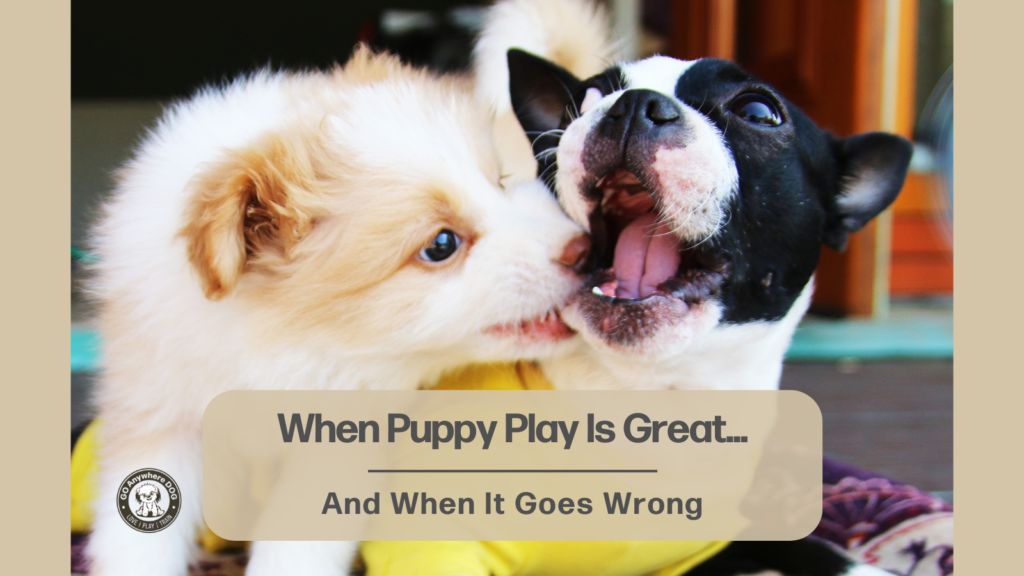
Two puppies playing - when it goes right & when it goes wrong

It’s one of the most confusing moments for puppy parents—and for trainers too.

You have a puppy who starts early.
They play beautifully.
They read cues.
They pause.
They’re flexible, social, and joyful.

Then somewhere around Life Skills 101… something shifts.

Play gets rougher.
Pauses disappear.
Intensity spikes.
Suddenly this “easy” puppy isn’t so easy anymore.

And everyone is left wondering:
What happened?

The answer is rarely what people expect.

The Puppy You See in Class Is Not the Whole Story

Early puppy classes are a protected environment.

They work because:

  • puppies are developmentally matched

  • play is supervised

  • interruptions happen early

  • arousal stays within a safe window

That allows puppies to practice good social skills—over and over again.

But play learning doesn’t stop when class ends.

And this is where things quietly unravel.

The Dog Park Effect (Even When Nothing “Bad” Happens)

When a puppy starts frequenting dog parks or playing with unfamiliar adult dogs, several things change at once:

  • playmates are mismatched

  • intensity is uncontrolled

  • boundaries are inconsistent

  • stress accumulates without resolution

Even when there’s no obvious fight, the puppy is learning something very specific:

I need to manage myself fast—or I get overwhelmed.

That lesson doesn’t always show up immediately.

Adult Dogs Are Not Neutral Teachers

There’s a persistent myth that adult dogs will “teach puppies manners.”

Sometimes they do.
Often they don’t.

Many adult dogs:

  • play too hard

  • correct too quickly

  • ignore subtle stress signals

  • escalate instead of regulate

To a developing puppy, that’s not education—it’s survival learning.

And survival learning changes behavior after the fact.

Why the Change Shows Up Later (Not at the Dog Park)

Here’s the key piece most people miss:

Puppies can hold it together in high-arousal environments.

Stress hormones keep them engaged.
Movement keeps them coping.

But nervous systems don’t forget.

Later—back in class, with familiar puppies—you finally see the cost:

  • shorter fuses

  • fewer pauses

  • rougher play

  • less flexibility

Same puppy.
Different nervous system state.

This isn’t regression.
It’s delayed expression.

What Actually Changes in Play

After repeated unsupervised adult-dog exposure, puppies often begin to:

  • skip polite play invitations

  • rush greetings

  • escalate faster

  • struggle with turn-taking

Not because they’re “bad,” but because they’ve learned:

If I don’t come in strong, I get steamrolled.

That’s not confidence.
That’s compensation.

Prevention vs. Repair

Once play shifts, it can be rebuilt—but now you’re doing repair work.

Repair requires:

  • re-teaching pauses

  • reintroducing safety

  • reducing arousal

  • rebuilding trust in play

Prevention is simpler.

Prevention looks like:

  • carefully matched playmates

  • active supervision

  • early interruptions

  • protecting good play reps

This is why we’re so selective about puppy play environments—and why we ask the question:

“Has your puppy been to the dog park or played with unfamiliar adult dogs?”

Because every time the answer is yes, we know exactly where to look next.

This Isn’t About Blame

Puppy parents don’t make these choices out of neglect.
They make them out of love.

They want their puppy to be:

  • social

  • confident

  • happy

  • well-adjusted

Unfortunately, “more exposure” isn’t the same thing as better exposure.

As Ian Dunbar has long emphasized, early experiences don’t just teach behavior—they shape emotional responses. Once safety is compromised, learning changes.

The Takeaway

If your puppy’s play looks amazing early on, that’s not an accident.
It’s the result of good structure and protection.

If play suddenly shifts later, don’t panic—and don’t shame yourself.

Instead, zoom out.

Look at where your puppy has been practicing.
Look at who they’ve been learning from.
And remember:

Protecting puppy play early isn’t limiting—it’s liberating.

Because when puppies learn that play is safe, fair, and flexible, they don’t need to armor up.

They can stay the joyful, social dogs they started as—and truly grow into Go Anywhere Dogs®. 🐾

Share:

Facebook
Twitter
Pinterest

Social Media

Be Your Puppy's Hero
Puppy school cartoon dogs branding graphic

The Go Anywhere Dog® Guide:
Be Your Puppy’s Hero

Hero Moments:
The Only Ones That
Matter Early On
 A hero moment is not when you teach a skill. It’s when you protect safety without need for proving anything.
jody-karow-founder-go-anywhere-dog-scaled.jpeg – Go Anywhere Dog®, Minneapolis & Twin Cities, MN, Dog Training

Jody Karow - CTC

Founder & Lead Dog Life Coach — Go Anywhere Dog®

Helping dogs — and their humans — master the social skills that make a Go Anywhere Dog®. Science-based. Play-driven. Boundaries without trauma®.

Jody Karow is the founder and lead trainer at Go Anywhere Dog® in Eden Prairie, serving families across the Minneapolis metro. With 20+ years of hands-on experience, Jody’s special sauce is social skills—the confidence, play etiquette, and emotional regulation that turn a good puppy into a Go Anywhere Dog®. Her method blends behavioral science with joyful practice: trust first, skills second, obedience that lasts.

Her work sits at the intersection of behavioral science, emotional intelligence, and real-world practice, helping families raise calm, joyful dogs who can truly go anywhere with them. Jody’s guiding principle is simple and unwavering: build trust before obedience. Because the best-behaved dogs aren’t managed—they’re connected.

When she’s not teaching puppies the art of polite play, Jody mentors fellow trainers, writes about dog-human relationships, and explores the trails around the Minneapolis metro with her own Go Anywhere Dogs by her side.

On the Blog
Two puppies playing - when it goes right & when it goes wrong
Puppy Development

Why Puppy Play Looks Great… Until It Doesn’t

It’s one of the most confusing moments for puppy parents—and for trainers too. You have a puppy who starts early.They play beautifully.They read cues.They pause.They’re flexible, social, and joyful. Then somewhere around Life Skills 101… something shifts. Play gets rougher.Pauses disappear.Intensity spikes.Suddenly this “easy” puppy

Read More »
How to speak dog through understanding dog body language - video
Dog Body Language

How to Speak Dog – Dog Body Language

Ever wish your dog came with subtitles? Good news—you don’t need them. In this short and wildly popular video (nearing a million views!), you’ll learn how to read dog body language so clearly it’s like your pup is talking to you. Whether you’ve just

Read More »
Woman kneeling with a happy puppy, gently teaching or playing.
Puppy Development

A Woman’s Way to Raising a Confident Puppy

Women Don’t Need to Be “Alpha” — They Need to Be Themselves Women are told more than anyone: “You’re too soft.” “You need to be tougher.” “Your dog is dominant.” “You need to show who’s Alpha.” And every woman who has ever doubted herself because

Read More »
New puppy sitting between woman's legs doing Go Anywhere Dog signature Peek-a-boo training skill
Training Foundations

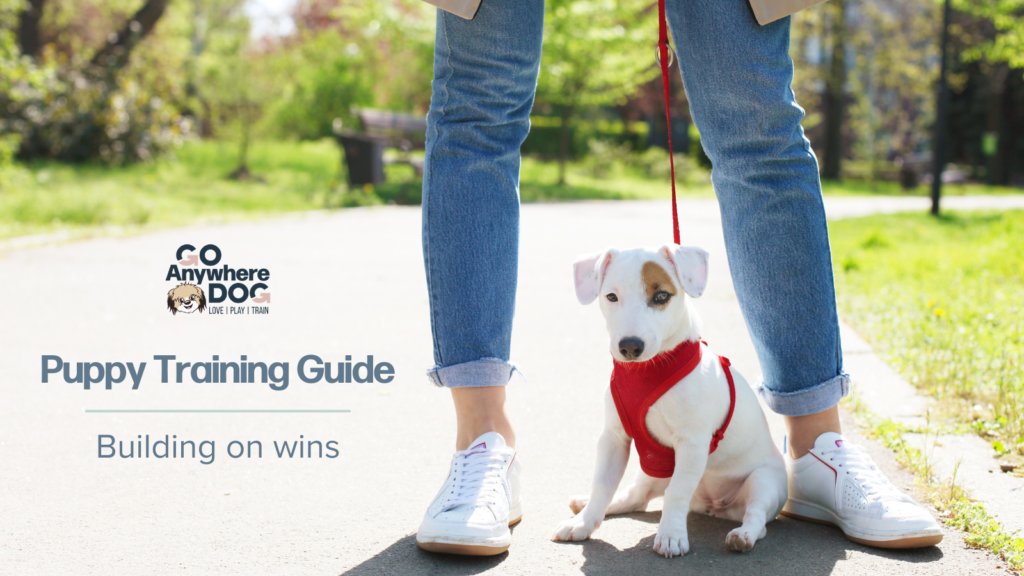
Puppy Training Guide – Small Steps = Big Results

Small steps. Big results. Gentle training that builds trust first. Tiny, joyful reps teach faster than long, perfect ones. When it’s hard, make the next rep easier, shorter, or simpler. Ladder skills: home → yard → public → real life. Puppy Classes Near You

Read More »
Yellow Labrador puppy eating treats as rewards during training
Training Foundations

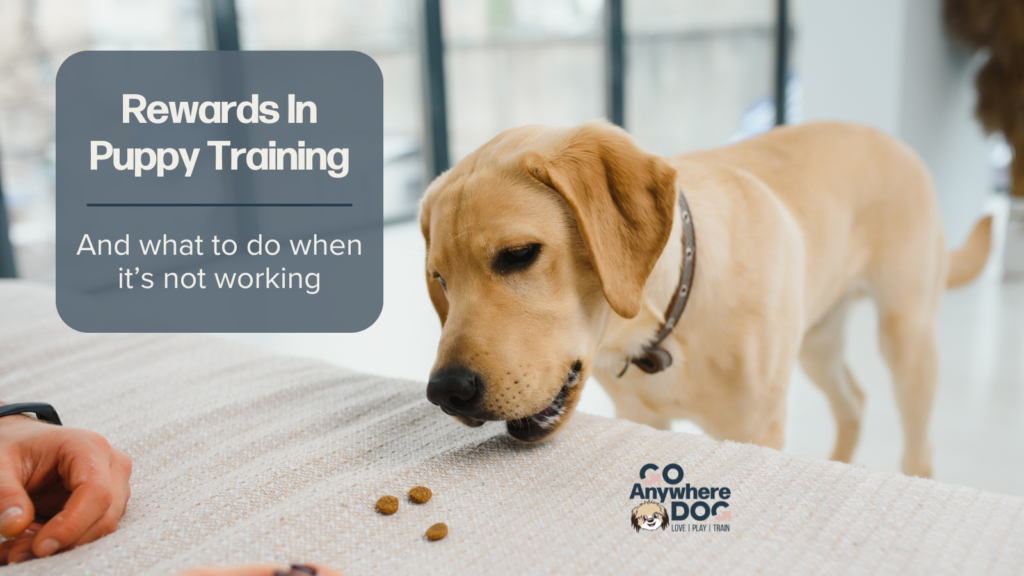
Why Rewards Work in Puppy Training (And What Happens When They Don’t)

If rewards “stop working,” it’s rarely because a puppy is stubborn or manipulative. It’s usually because motivation, emotion, or clarity broke down somewhere along the way. In this video, I explain how rewards actually function in puppy training, why motivation comes before obedience, and what

Read More »
Explore The Category of Your interest

Puppy Development

Early experiences shape confidence, coping, and resilience for life. This category explores how puppies learn long before formal training begins — and why early understanding matters more than early obedience.

Dog Body Language

Understanding how dogs communicate through posture, movement, facial expression, and subtle physical signals — so behavior makes sense in real time.

Behavior & Emotion

Behavior isn’t random. It’s driven by emotion, history, and context. These posts help you understand what dogs are feeling when behavior shifts, escalates, or seems confusing.

Fear & Stress

Fear isn’t defiance — it’s communication. This category focuses on recognizing fear early, understanding stress responses, and responding in ways that increase safety rather than escalation.

Training Foundations

Clear expectations, motivation, and learning principles that make training effective without force or intimidation. These pieces focus on why learning works — not just how.

Life With Dogs

Play, routines, enrichment, and real-world living. This category looks at how dogs fit into human lives with joy, structure, and realism.